About Diospyros dichrophylla (Gand.) De Winter
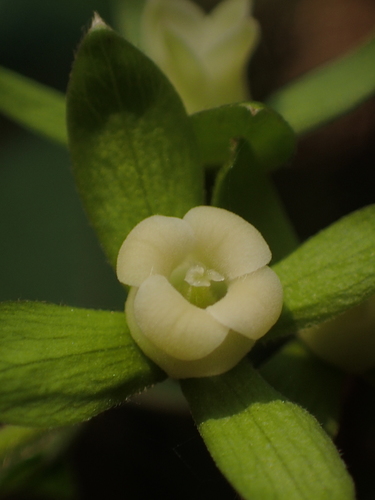
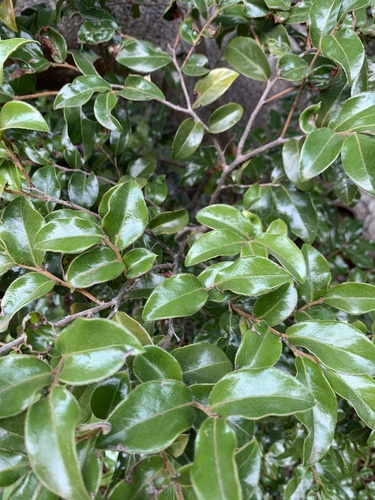
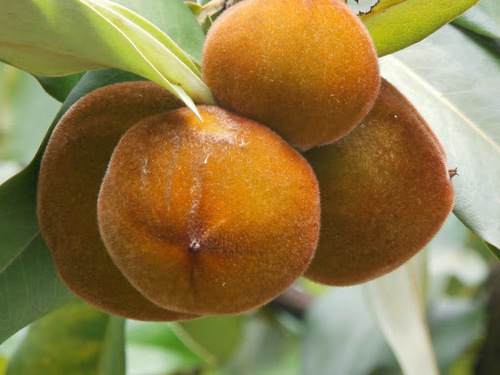
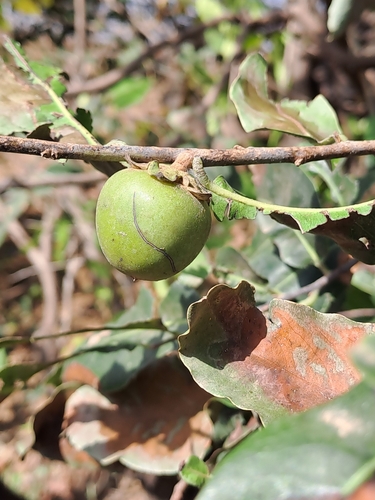
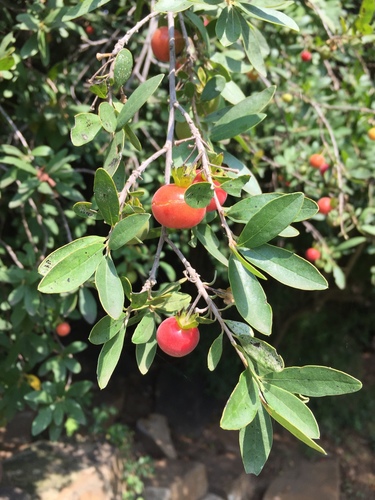
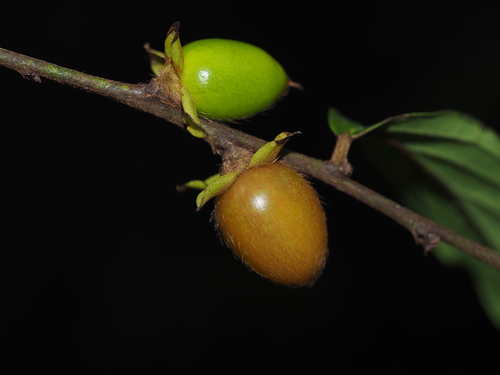
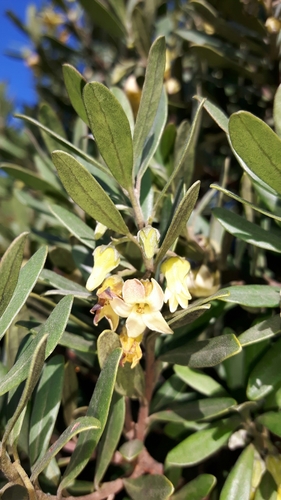
The genus Diospyros contains around 700 species; many are ornamental, and many produce edible fruit that is often cultivated. Diospyros dichrophylla grows into a medium-sized tree reaching up to 15 m in height. It is multi-stemmed and develops a dense canopy. Its bark is greyish-brown, ranging from smooth to slightly wrinkled, and is sometimes covered with thick, wooden spikes that are leftover from the bases of old branches. New young growth is covered in yellowish hairs that give it a velvety texture. Its simple leaves are alternately arranged, oblong to oval in shape, with bluntly pointed or rounded tips. The leaves are glossy dark green on their upper surface and pale green on their lower surface, and their edges are often tightly rolled under. The bell-shaped, pendulous creamy-white flowers appear between November and March. They are pentamerous, with strongly reflexed petals and sepals, and male and female flowers grow on separate individual plants. The fruits grow up to 25 mm in diameter, and are depressed-globose or pumpkin-shaped. They are covered in a dense layer of velvety hairs, and retain a large, enlarged persistent calyx. The clear, jelly-like fruit pulp contains 3 to 8 shiny brown, slender seeds that are 10 mm long, each marked with one prominent dark spot. Some sources note that this species is described as poisonous. This is confusing, because ripe fruits of most Diospyros species are tasty and edible, while unripe green fruits are high in tannins. This species is common in coastal scrub, coastal sandy flats, and along forest edges. It occurs across a broad coastal belt stretching from Montagu and the Overberg region in South Africa's Western Cape, east and north through the Eastern Cape, along South Africa's KwaZulu/Natal coast, into Eswatini, along the Lebombo Mountains and the Soutpansberg, and further north into Mozambique. It prefers moist habitats with high rainfall.