About Diglossa plumbea Cabanis, 1861
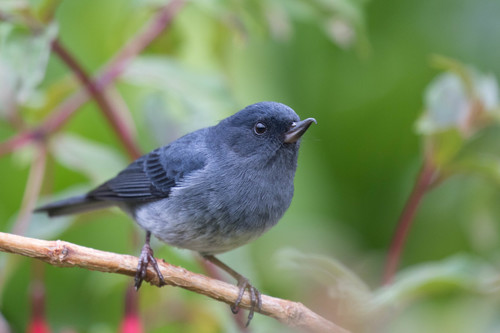
The slaty flowerpiercer, with the scientific name Diglossa plumbea Cabanis, 1861, is a passerine bird that is endemic to the Talamancan montane forests. It is a common species found in the canopy and edges of mountain forests, particularly in sunlit clearings and areas with flowering shrubs, including gardens. The lower altitudinal limit of its breeding range increases from 1200 m in northern Costa Rica to 1900 m in the southern mountains of the region. It can also be found well above the timberline in páramo habitat. The female slaty flowerpiercer builds a large cup-shaped nest. The nest is constructed from coarse plant material, lined with fine fibres, and placed 0.4 to 4 metres above the ground in a dense shrub, grass tussock, or pine. A clutch consists of two pale blue eggs with brown speckles. Only the female incubates the eggs, which hatch after 12 to 14 days. The slaty flowerpiercer has an upturned bill with a hooked upper mandible and a pointed lower mandible. It is 10 cm long and weighs 9 g. Adult males are blue-grey, with a lead-grey throat and breast. Their tail and wings are blackish, with grey edges to the feathers. Females are olive-brown on their upperparts, with a paler throat and breast that shades to buff on the belly. Young birds resemble females, but have two tawny wing bars and faintly streaked buff-yellow underparts. This species produces a thin tsip call. The male's song is a mix of whistles, warbles, and trilled notes, transcribed as see-chew see-chew see-chew seer seer surrzeep, tsee tsew tsink tsink tsink. As its common name suggests, the slaty flowerpiercer uses its bill to pierce the base of flowers from shrubs and epiphytes, then extracts nectar through the hole with a brush-like tongue. It also feeds on very small insects, which it collects from foliage or catches in flight. Territorial hummingbirds defending their feeding areas attack slaty flowerpiercers, which then retreat to dense cover.