About Digitaria sanguinalis (L.) Scop.
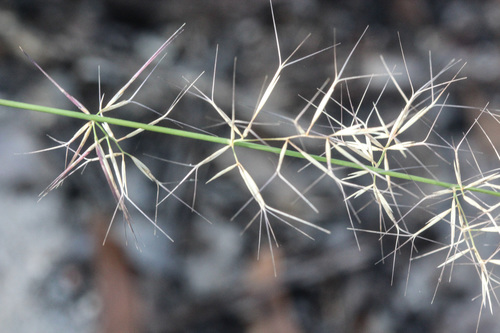
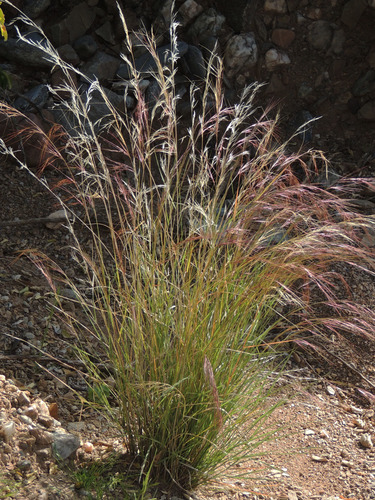
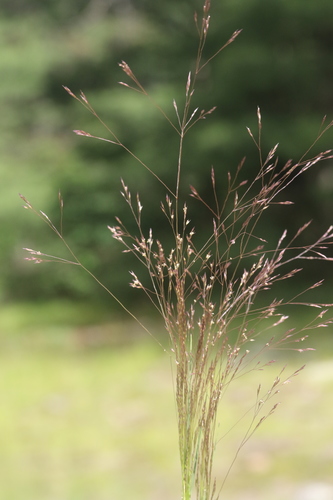
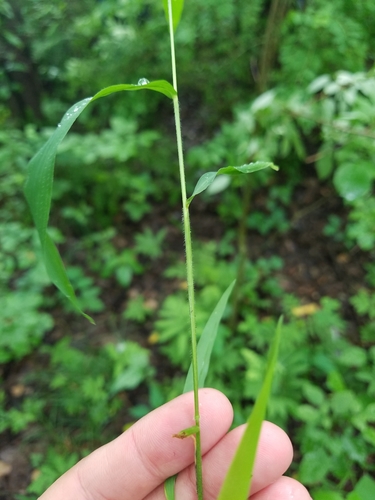
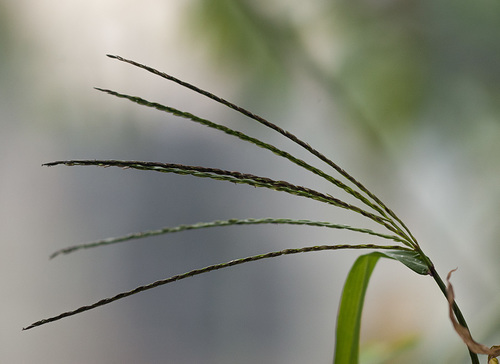
Digitaria sanguinalis is an annual grass. Its stems hold an inflorescence with up to nine very long, very thin radiating branches. Each branch is lined with pairs of very tiny spikelets, and the inflorescences can be reddish or purplish. During the European Middle Ages, this grass was cultivated by Slavic peoples in Eastern Europe, and cooked in soups and porridges. Immigrants brought the plant to the United States to use as a hand-foraged grain. This grass is highly nutritious, particularly before it expends energy producing seed. It is often sown in fields to provide grazing for animals, or clipped and bundled as hay. It has a relatively higher protein percentage than other grasses. Sometimes farmers till patches of their pastures in late spring specifically to encourage crabgrass seed germination. For human consumption, this crabgrass must be harvested by hand, because its grain develops throughout the summer rather than all at once. Machine harvesting would require monthly trips through fields, and even with this approach, much of the seed would still be wasted. Crabgrass produces an exceptionally high amount of grain, smothers other weeds, acts as its own mulch, and can tolerate both heat and drought. Its adaptability makes it a good candidate for environmental small-scale farming.