About Digitalis ciliata Trautv.
Nomenclature and Growth Form
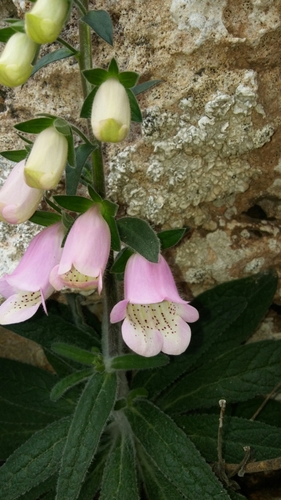
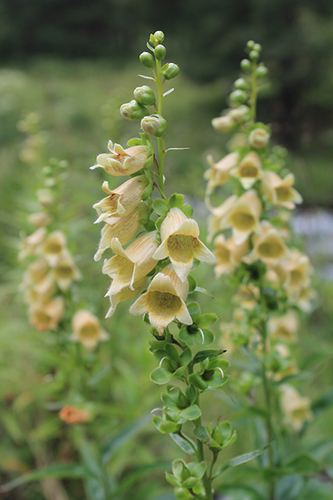
Digitalis ciliata Trautv. is an herbaceous species, with individual plants growing between 30 cm and 60 cm in height.
Leaf Characteristics
It has an alternate leaf arrangement, with small, green, lanceolate leaves.
Toxicity and Medicinal Significance Overview
This species is known both for its medicinal uses and for its high toxicity if ingested.
Inflorescence Structure
Its flowers grow at the terminal ends of stems, arranged in a raceme inflorescence.
Native Range
Digitalis ciliata is native to the Caucasus region.
Habitat
It is an indigenous mountain species that can be found growing in meadows, pastures, forest margins, and on slopes.
Cardenolide Glycoside Content
Medicinally, Digitalis ciliata is used to isolate cardenolide glycosides, and contains most of the glycosides that the Digitalis genus is known for, including digitoxigenin, gitoxigenin, digoxigenin, gitaloxigenin, and diginatigenin.
Seed Phytochemical Content
The seeds of D. ciliata are rich in the steroid glycoside digitonin, along with other lipids that are important for cardiac treatments.
Anti-Proliferative Research Potential
Beyond its use in cardiac medicine, researchers are investigating the anti-proliferative properties of D. ciliata for potential use in suppressing tumors.
Anti-Tumor Mechanism Evidence
There is some evidence that saponins from this species have an anti-tumor effect, supporting cell cycle arrest and apoptosis, or programmed cell death.