About Dicksonia fibrosa Colenso
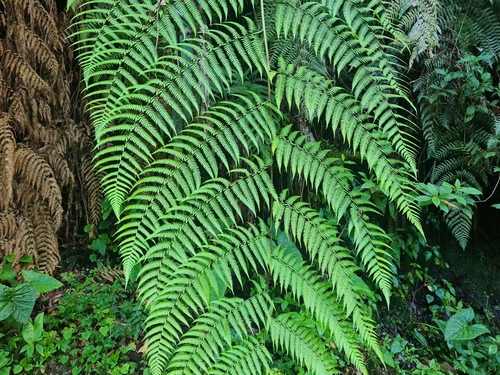
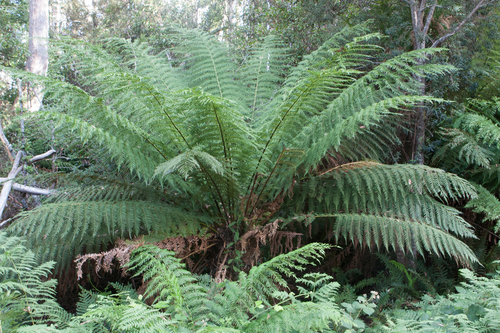
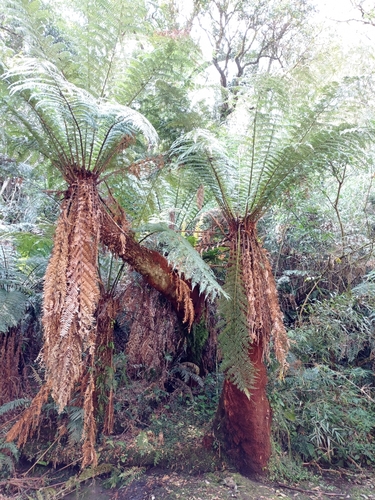
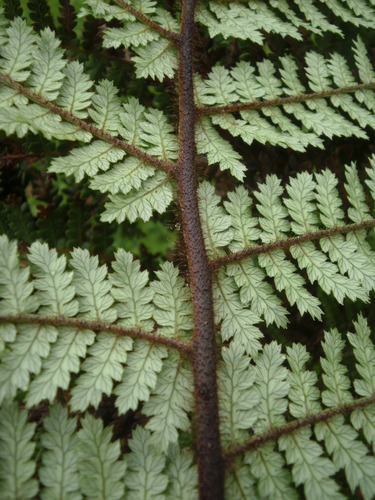
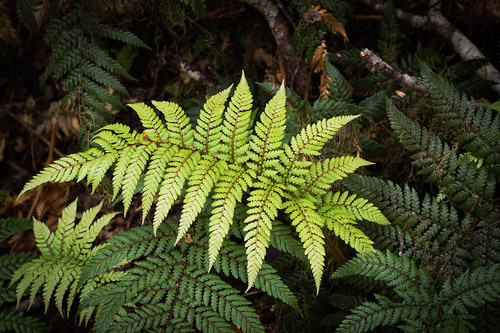
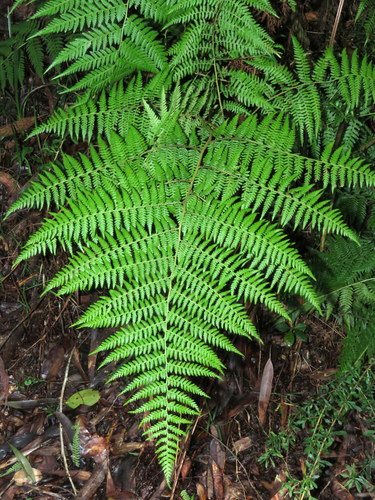
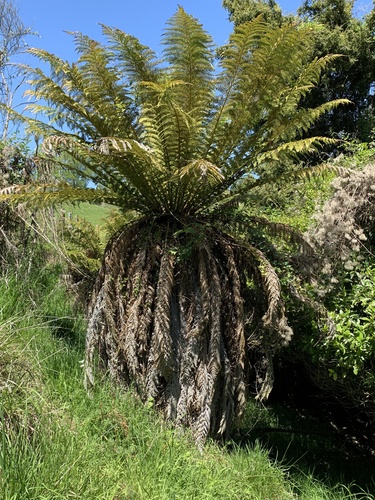
Dicksonia fibrosa Colenso, commonly known as whekī-ponga, has a thick, soft, fibrous rusty brown trunk. According to Large & Braggins, the trunk can grow up to 2 metres (6 ft 7 in) in diameter. This species retains its dead leaves, forming a distinctive pale brown skirt that sets it apart from the related species Dicksonia squarrosa. It is a slow-growing plant, similar to Dicksonia antarctica, and can reach a maximum height of 6 metres (20 ft). In regions that experience winter frosts, it requires winter protection. A local race or variety of D. fibrosa found in the Tauranga region regularly branches dichotomously, and can produce as many as nineteen forks.
In terms of distribution and habitat, D. fibrosa occurs naturally in the South Island, Chatham Islands, and the North Island of New Zealand. It is uncommon north of the Waikato River and Coromandel Peninsula, and rare on Stewart Island. It is now naturalised in the Auckland area, and on Hawaiʻi. This species inhabits coastal and montane areas. In the Kaweka and Ruahine ranges of the North Island, it grows at elevations up to 1100 m, while in Marlborough it only grows up to around 400 m in elevation. D. fibrosa prefers wet areas and gullies under full forest cover, particularly podocarp, southern beech, or broadleaf forests. It is quite cold-hardy and can be found in many temperate regions that experience sub-zero temperatures.
Ecologically, D. fibrosa is a long-lived species that can live up to 250 years. It plays an important role in nutrient cycling, and influences local light levels by shading out light-loving species. Its stems provide growing sites for epiphytes, and the species also acts as a host for many species of fungi. Over 150 years ago, Māori cut slabs from the thick stems of D. fibrosa (whekī-ponga) alongside slabs from D. squarrosa to use in constructing the exteriors of houses, and for lining underground storage spaces. This species has been awarded the Royal Horticultural Society's Award of Garden Merit.