About Dichanthelium lindheimeri (Nash) Gould
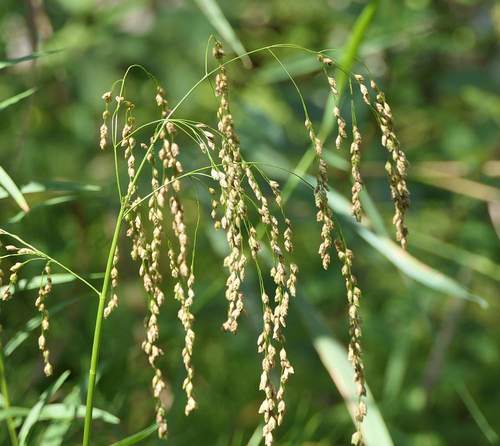
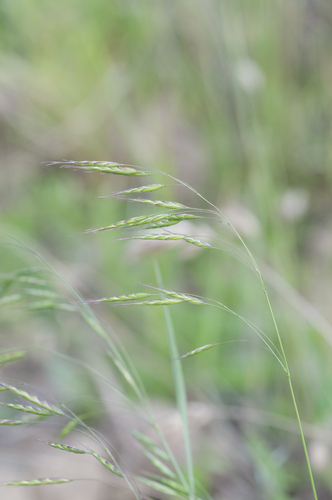
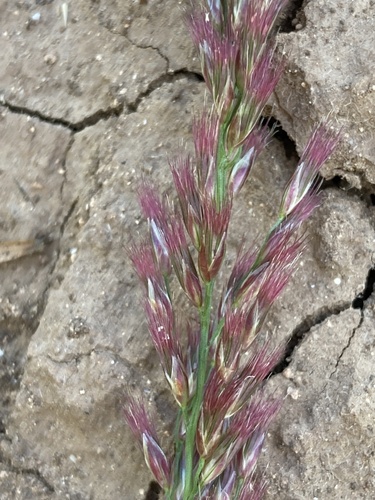
Dichanthelium lindheimeri, commonly known as Lindheimer panicgrass, is a flowering plant species that belongs to the grass family Poaceae. It is primarily native to eastern regions of the United States and Canada, and its range extends into the South Central United States. Isolated outlying western populations also exist in California, New Mexico, and Oregon. This species most often grows in sandy, ephemerally wet soils. Its typical habitats include prairies, glades, streambanks, floodplains, and lake shores. Dichanthelium lindheimeri is a perennial grass that fruits between May and November. It looks superficially similar to its close relative Dichanthelium lanuginosum, but differs in several key traits: D. lindheimeri has nearly hairless sheaths and leaf surfaces, crooked marginal leaf cilia, and a shorter ligule. Additionally, D. lindheimeri typically occurs in wetter habitats than the more dry-mesic D. lanuginosum. Some authors treat Dichanthelium lindheimeri and many other closely related taxa as varieties within an expanded, highly polymorphic Dichanthelium acuminatum complex.