About Dichanthelium leibergii (Vasey) Freckmann
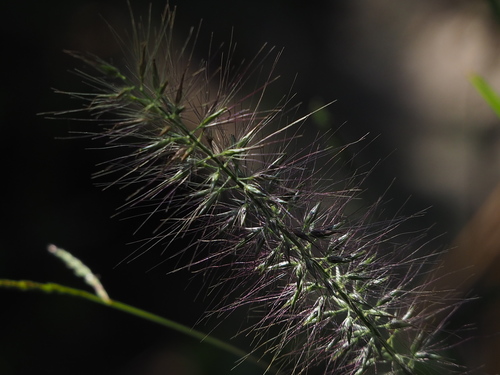
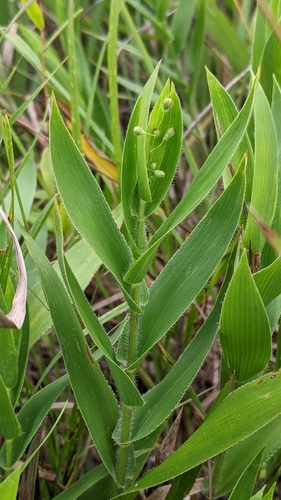
Leiberg's panicgrass, Dichanthelium leibergii, is a small perennial grass that forms loose rosettes, with culms growing 30 to 60 centimeters (12 to 24 inches) tall. It can be distinguished from other similar Dichanthelium species by a combination of traits: leaves less than 15 millimeters (0.59 inches) wide, which are less than 15 to 20 times as long as they are wide; hairy leaves; a slender stem; a narrowly ovoid panicle; and spikelets that bear long, soft hairs up to 1 millimeter (0.039 inches) long. The first glume is narrowly ovate and reaches the middle of the spikelet.
Dichanthelium leibergii ranges north to Alberta, west to Kansas, and east to New York state. It is fairly common in Manitoba, and was formerly a dominant species in mesic to dry tallgrass prairies in Iowa, Wisconsin, and Minnesota. Today, it is a rare species across most of its range. Its abundance has decreased in most surviving prairies and oak savannas, a change likely driven by fire exclusion and late-spring fire. These conditions favor big bluestem and indiangrass, which have long rhizomes that allow them to emerge through litter, and belowground buds along their rhizomes that let them resprout after their culms or rhizome tips are damaged by fire. This species is state threatened in Indiana, Michigan, and Ohio; state endangered in New York; and extirpated in Pennsylvania.
In the Chicago region, D. leibergii is a highly conservative species with a coefficient of conservatism of 10. It grows in high-quality prairie remnants, including wet prairie, mesic prairie, and gravel hill prairie, as well as in dry-mesic black oak savannas and oak openings. A study in North Dakota found that its coverage increased significantly after prescribed burning was applied.