About Dichanthelium lanuginosum (Elliott) Gould
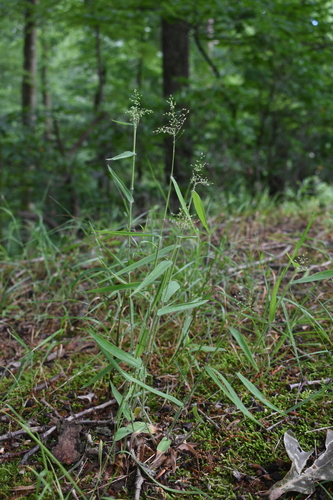
Dichanthelium lanuginosum, whose full scientific name is Dichanthelium lanuginosum (Elliott) Gould, is a rosette grass species native to North America. It is most widespread across the central and eastern United States, and grows in a range of different habitats, most commonly open, dry locations. One variety of this species, D. lanuginosum var. thermale, grows in the geothermal areas of Yellowstone National Park in the United States. This variety can withstand both high temperatures and high acidity in the soil around its roots, called the rhizosphere. A 2007 discovery found that the grass's heat tolerance comes from a three-way symbiosis between the grass, a fungus, and a virus. When the grass is colonized by the fungus Curvularia protuberata, and that fungus is itself colonized by a specific virus, the grass can survive soil temperatures as high as 65 °C, a temperature that would normally kill the plant. Because this variety is genetically distinct and geographically isolated from the main species, it is sometimes classified as its own separate species under the name Dichanthelium thermale.