About Dichanthelium clandestinum (L.) Gould
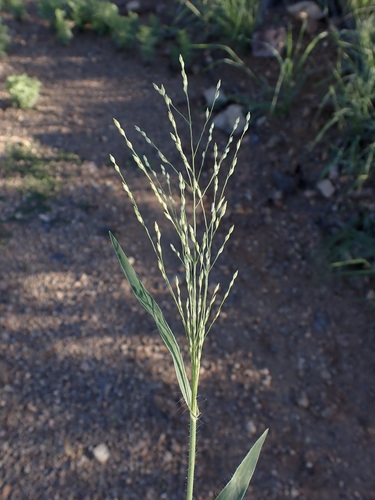
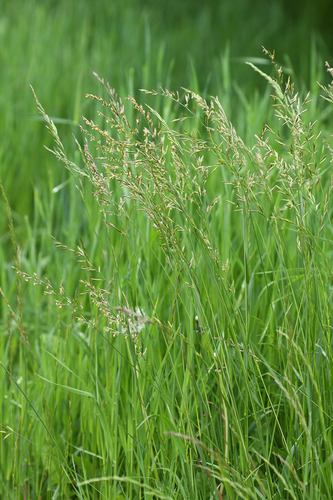
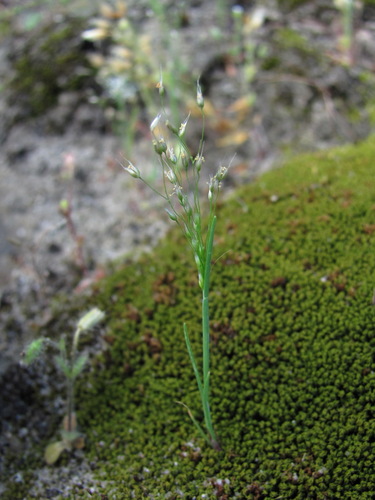
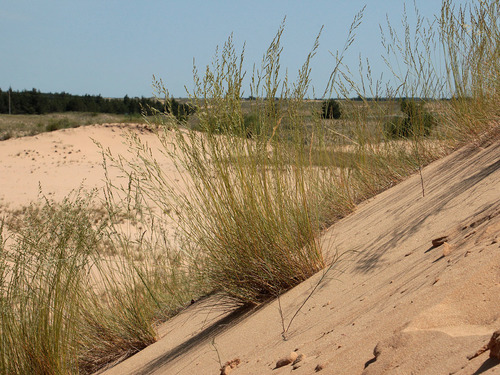
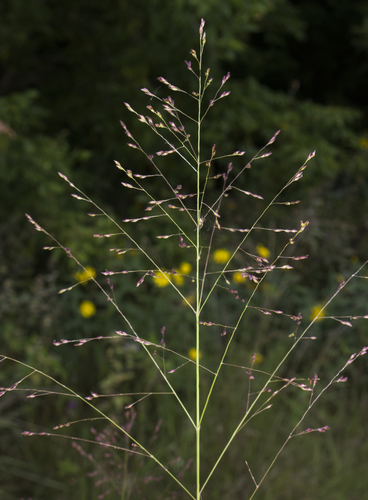
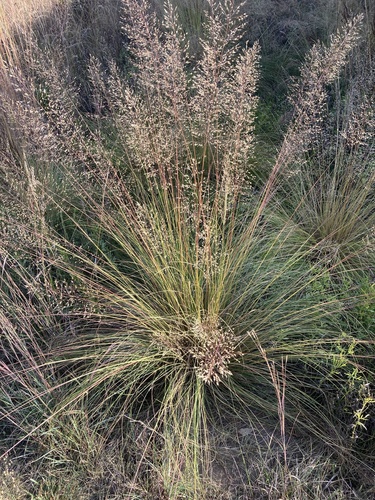
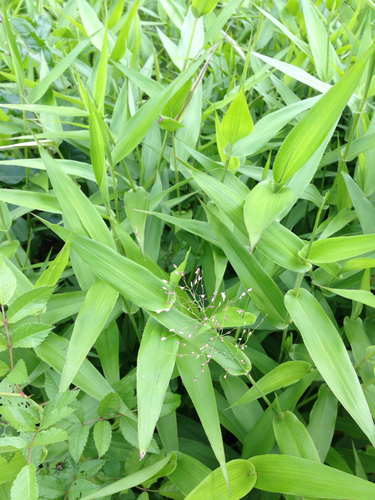
Dichanthelium clandestinum, a species of grass, is commonly known as deertongue. It is native to eastern North America, specifically eastern Canada and the eastern United States. This species is a rhizomatous perennial grass that grows in clumps of hairy stems reaching up to 1.4 meters tall. Five to 10 leaves grow along each stem; each leaf is up to 25 centimeters long and 3 centimeters wide, lance-shaped, sometimes rigid, and ranges from hairless to slightly hairy. It produces two different types of inflorescence. The main panicle holds many spikelets of flowers that open and are cross-pollinated. The second type holds cleistogamous flowers, which do not open and self-pollinate. These cleistogamous flowers grow in the sheaths of the stem leaves and are sometimes hidden, and they develop later in the year than the open panicle. This grass produces approximately 400,000 seeds per pound. It can tolerate high levels of aluminum in soil, as well as acid soils and thin, infertile soils. It can be used to revegetate reclaimed land such as mine spoils. The cultivar 'Tioga' has been available commercially since 1975. The seeds of deertongue attract many types of birds, including turkeys. The grass is not considered good forage for livestock because it has low nutrient content.