About Dichagyris musiva (Hübner, 1803)
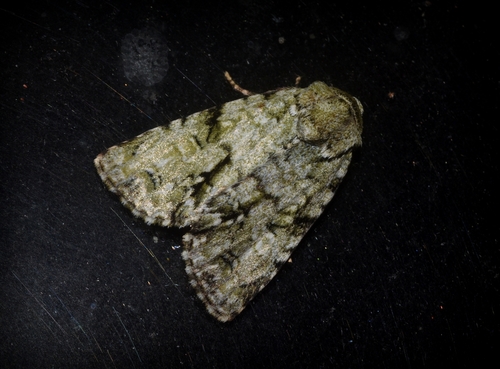
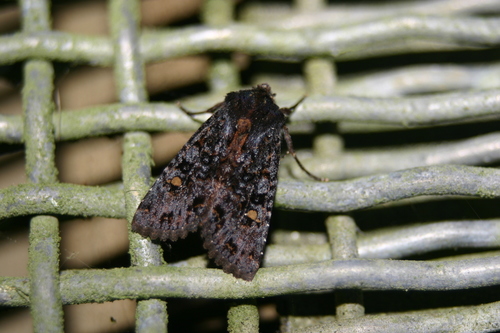
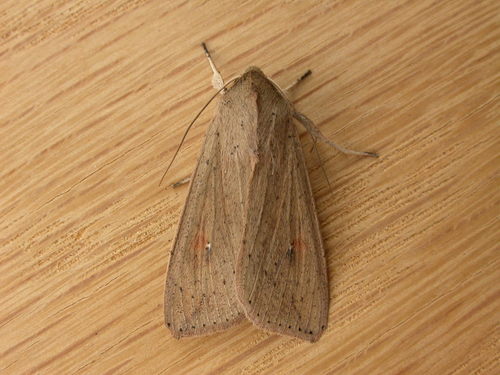
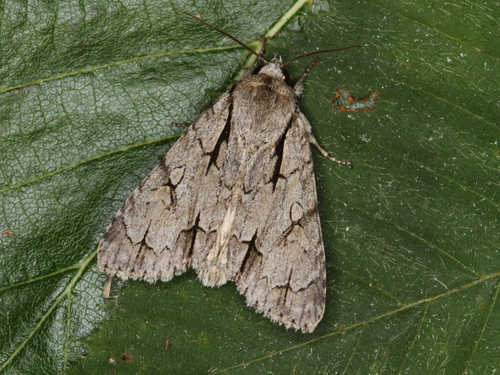
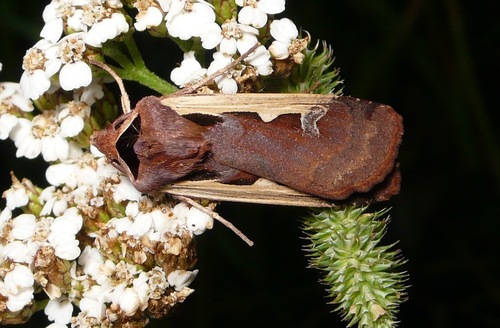
The wingspan of Dichagyris musiva is 38–44 mm. According to Warren’s 1914 account, this species (referred to there as R. musiva Hbn. (8f)) has forewings that are grey-brown with a reddish tint; the costal area is broadly cream-white out to the outer line. The edges of the two stigmata are also cream-white, while their centers are grey. The cell and a blotch below it at the base are black-brown, matching the dark color of the upper part of the shoulders. All wing lines are indistinct. The hindwing is cream-white, with grey veins and apex, and yellowish-white fringe. In Europe, this species ranges from southern Russia through Hungary, Austria, and Germany to Switzerland. It is widespread across Asia, occurring in Armenia, Asia Minor, the Altai Mountains, Siberia, western and eastern Turkestan, Mongolia, and Amurland. The larva is mottled yellowish brown and dark, with oblique subdorsal streaks and dark lines, and feeds on various low-growing plants.