About Dicerothamnus rhinocerotis (L.fil.) Koek.
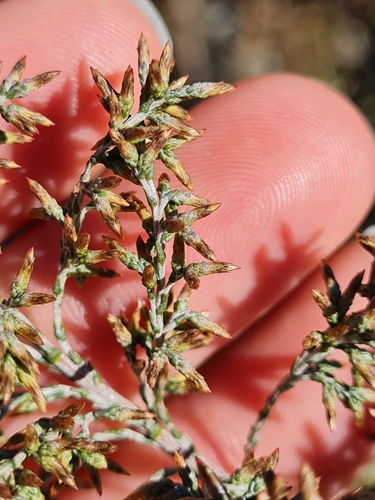
Dicerothamnus rhinocerotis (L.fil.) Koek., synonym Elytropappus rhinocerotis, is commonly known as renosterbos or "rhinoceros bush". It is a species of flowering plant in the daisy family, Asteraceae, that is endemic to South Africa. It is a very prominent component of the unique Renosterveld Vegetation Type, which is named after this bush. While the Renosterveld Vegetation Type is only found in the South-Western Cape of South Africa, the renosterbos plant has a much wider distribution. It occurs throughout the Cape Floristic Region and beyond, reaching as far east as Molteno in the Eastern Cape and as far north as Namibia. Renosterbos is also relatively common across this range, unlike most plants associated with Renosterveld vegetation. Because livestock find this plant relatively inedible, Dicerothamnus rhinocerotis has spread into heavily grazed areas, and its populations have grown relative to other more palatable plants. Dicerothamnus rhinocerotis is used as a medicinal plant in traditional African medicine. The young branch tips are used in traditional medicine to treat indigestion and stomach ulcers. Today, these foliage tips are usually added to wine or brandy for this medicinal use. Dicerothamnus rhinocerotis is cultivated as an ornamental plant for South African native plant gardens, drought tolerant gardens, and wildlife gardens. It is also planted in natural landscaping and habitat restoration projects. A cultivar with a strikingly crisp, pure-white color is more commonly grown in gardens than the wild type species.