About Diarsia mendica Fabricius, 1775
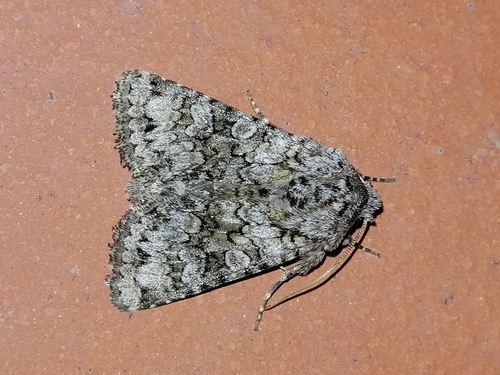
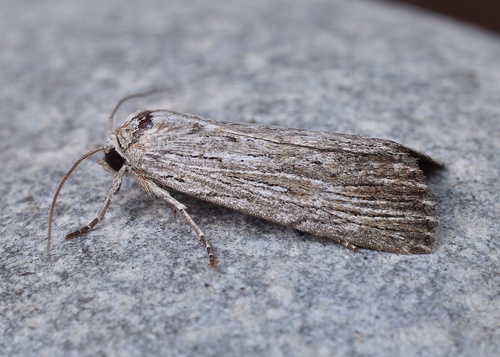
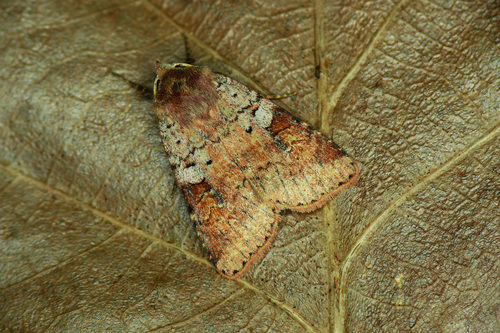
Diarsia mendica Fabricius, 1775 has a wingspan ranging from 28 to 36 mm. Its forewing has a grey basal area and a red-brown outer area, with lines and stigmata in grey. The hindwing is dull grey, marked with a dark lunule and a transverse line, and has reddish fringe. Males are typically paler than females. This species is highly variable in both color and the clarity of its markings, with multiple named aberrations: ab. congener Hbn. is entirely red-brown with yellowish stigmata; ab. subrufa Haw. has a dark cell at the base and between the stigmata; ab. conflua H.-S. nec Tr. has a reddish ochreous ground color mottled with darker shades; ab. mendica F. matches the previous aberration but has black or dark brown spaces within the cell; ab. ignicola H.-Sch. has a yellowish ochreous ground color with distinct markings; primulae Esp. is the same form as ab. ignicola, but the cell is filled with blackish color; ab. ochrea-virgata Tutt is a banded form, with the entire area between the median and subterminal line being darker; ab. grisea Tutt is a small dark grey form with clear stigmata; ab. coerulea Tutt is a clear slaty or lilac color with pale stigmata; and ab. lamentanda Alph. is a pale, uniformly ochreous form found in Siberia and Kamschatka. The subspecies Diarsia mendica conflua Tr. (= thulei Stgr.) is smaller, with narrower, more pointed forewings that are reddish brown mixed with yellowish; it has large stigmata with dark marks in the cell, was originally described from Iceland, and also occurs in Shetland and Lapland. Within this subspecies, ab. borealis Zett. is a grey brown form that lacks any red coloration but has a blackish cell; obsoleta Tutt resembles ab. borealis, but its cell is unicolorous and its markings are obscure; ab. diducta Zett. has a grey forewing with a broad rusty-testaceous fascia, and its markings are obscured. The larva of Diarsia mendica is brown with black triangular markings along its sides. It feeds on a wide range of host plants, and overwinters in the larval stage. Recorded food plants include Calluna (heather), Campanula (harebell), Crataegus (hawthorn), Lactuca (lettuce), Pinaceae, Rubus (bramble), Rumex (dock), Salix (willow), and Vaccinium. See Robinson, G. S. et al. for further reference.