About Dianthera americana L.
Dianthera americana, commonly called American water-willow, is an herbaceous aquatic flowering plant in the Acanthaceae family. This perennial species is native to North America, where it is typically abundant across the eastern half of the continent. It grows along shorelines, in lakes and ponds, and in the shallow riffles of streams and rivers, and has drawn biological interest for its unusual vegetative reproduction and historical association with mosquito breeding.
D. americana is native to eastern North America, with a range stretching from Quebec and Ontario south to Georgia and Texas, and west to Nebraska and the northern Mexican states of Coahuila and Chihuahua. It is widespread across the eastern United States and particularly common in Tennessee Valley reservoirs. It most often grows along shores, streambanks, and shallow riverbeds, and strongly prefers flowing water; it is rarely found in stagnant ponds. It can grow in gravel, sand, and mud, and occasionally grows on driftwood or logs. It cannot survive in areas with heavy erosion, but can tolerate some wave action.
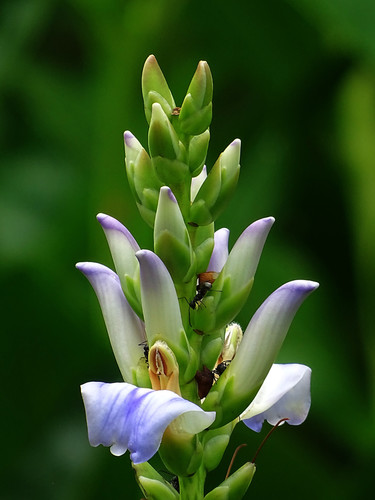
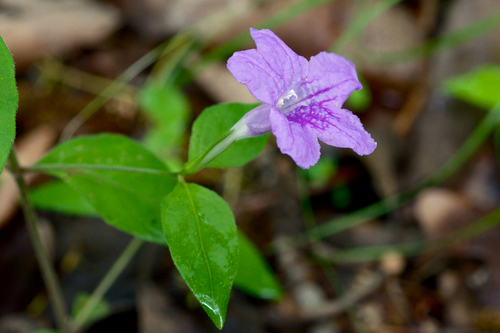
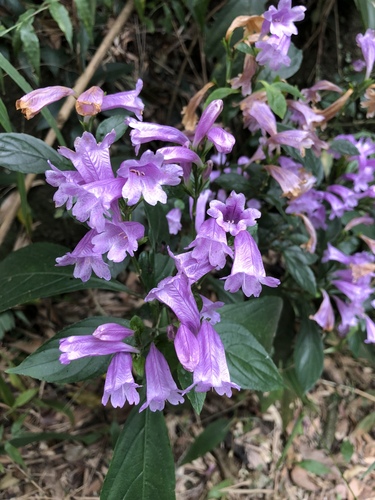
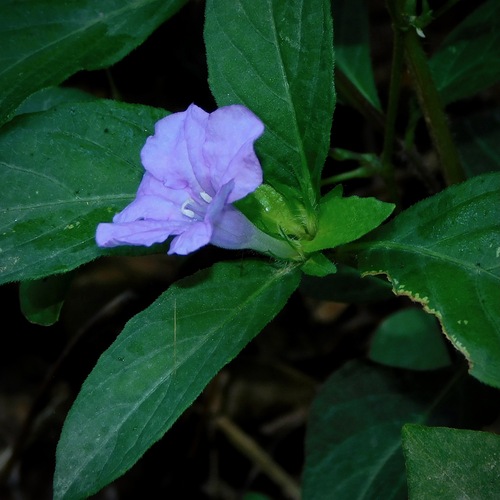
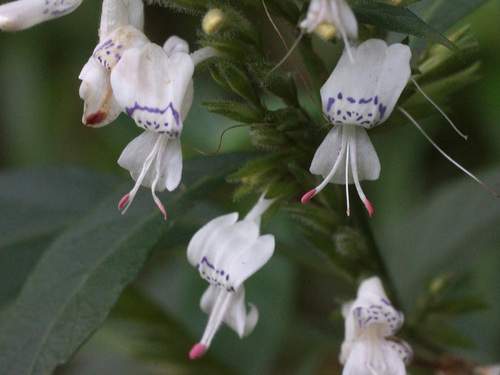
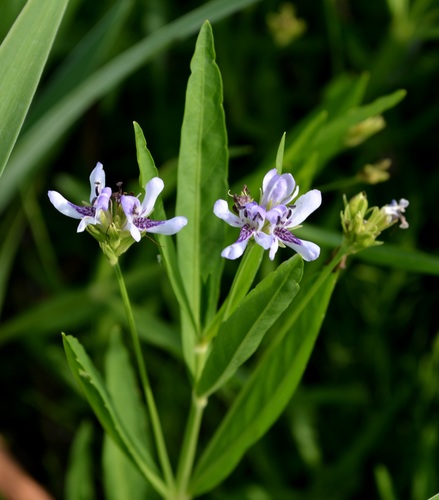
Flowering usually occurs between July and September, though flowering has been recorded as early as May. Flowers are often in full bloom by early June, and flowering is usually complete by mid-July, except in deeper water where the blooming period extends longer. Individual flowers are white or pale lavender, with purple spots or light speckling, and dark purple mottling near the base of the lower lip. The corolla is tubular and less than 1 inch wide. Only a small number of flowers open at the same time, but their display is considered showy and spans a long blooming period. A distinctive trait of the flowers, which gives the genus its name Dianthera, is that each anther is split into two unequal sacs, creating the appearance of two anthers on each filament.
Pollinators of D. americana flowers include bees, butterflies, and skippers. Some bird species eat its seeds, deer browse its foliage, and beavers and muskrats feed on its rhizomes. Its rhizomes and roots also provide important spawning sites for many fish species and habitat for invertebrates. Field studies show that aboveground biomass of D. americana is greatly reduced by terrestrial herbivory and riparian shading, while its belowground biomass is more variable. Its creeping rhizome lets Dianthera americana form large colonies on or near shorelines with fluctuating water levels, a trait that has been used to support shoreline stabilization and habitat restoration projects. Research has found that D. americana can be easily propagated from stem cuttings, and can produce new shoots and roots across a range of moisture conditions. Dense stands of American water-willow were once linked to mosquito breeding, which led to widespread control efforts in the 1930s that included manipulating water levels and applying herbicides; at the time, sodium arsenite-carbonate mixtures and sodium chlorate were considered the most effective control options.