About Dianella ensifolia (L.) Redouté
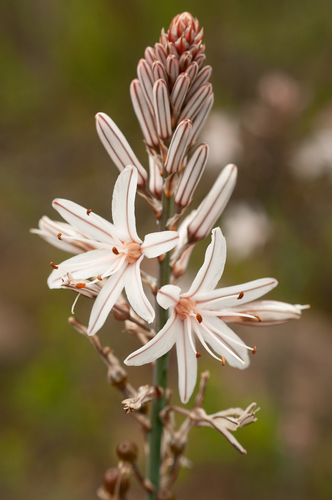
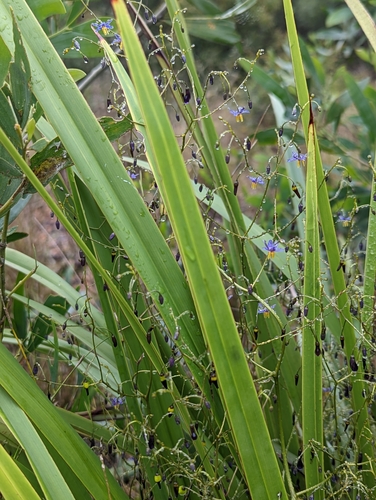
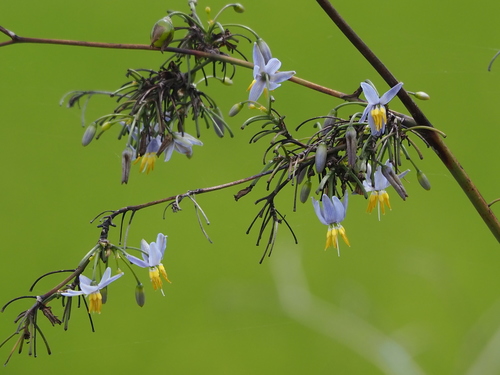
Dianella ensifolia (L.) Redouté is a terrestrial plant that grows in grasslands or primary rainforests in tropical regions. This plant has branching rhizomes and flowering stems that can grow up to two meters tall. Its leaf blades are pointed and tapered at both ends. When it blooms, it produces an approximately 60 cm (23.6 in) long flowering shoot. The flowers have white petals and orange to yellow anthers. After insect pollination, the plant produces dark blue to purple berries around 1.5 cm (0.59 in) wide. Each berry holds 3 to 6 seeds, and these berries are commonly eaten by native birds.
In 2020, researchers chemically analyzed the essential oil of D. ensifolia and tested its antibacterial, antioxidant, and cytotoxic properties. The main components identified in the essential oil were allo-aromadendrene (7.3%), geranylacetone (6.2%), hexahydrofarnesyl acetone (4.4%), longifolene (4.2%), and β-caryophyllene (4.0%). When tested individually, these compounds show potent antimicrobial activity, cytotoxic activity, potential to inhibit cell growth and proliferation, and in vivo protective effects against juglone-induced oxidative stress in roundworms.
Further investigation of the essential oil's antibacterial activity found it effectively inhibits the growth of multiple bacterial strains, including Bacillus subtilis ATCC 6633 and Staphylococcus aureus ATCC 6538. This inhibitory effect is linked to the geranylacetone, hexahydrofarnesyl acetone, longifolene, and β-caryophyllene present in the oil. The essential oil's cytotoxicity was also tested against human liver hepatocellular cells and a human breast adenocarcinoma cell line, and it produced a dose-dependent effect on both tumor cell lines. This effect may be connected to β-caryophyllene's reported ability to inhibit tumor motility and tumor aggression.
A 2010 study that screened plant extracts for antioxidant activity determined that Dianella ensifolia extract is a strong antioxidant and an agent that can be used to reduce skin hyperpigmentation. A compound isolated from the extract, 1-(2,4-dihydrophenyl)-3-(2,4-dimethoxy-3-methylphenyl) propane (DP), was found to inhibit a free radical linked to hyperpigmentation and ultraviolet-C induced lipid oxidation. When the plant extract was tested against two pharmaceutical topical treatments, researchers concluded that the DP-containing plant extract faded hyperpigmentation faster than the comparison treatments that contained hydroquinone.