About Diabrotica speciosa Germar, 1824
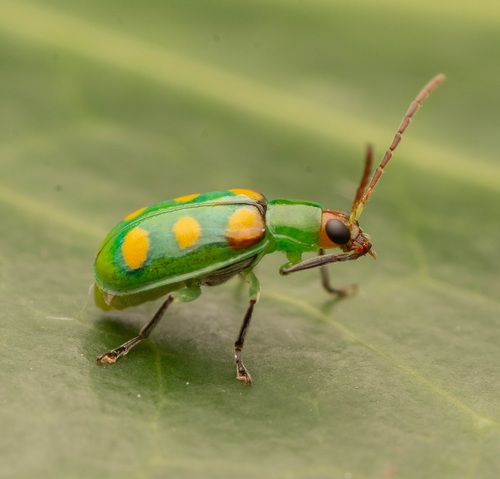
Diabrotica speciosa (Germar, 1824) is an insect pest commonly called the cucurbit beetle. It is also known as vaquita de San Antonio in Spanish, a common name that is also used for many ladybug species; its other English common name is San Antonio beetle. This species is native to South America, where it occurs in Argentina, Bolivia, Brazil, Colombia, Ecuador, French Guiana, Paraguay, Peru, Uruguay, and Venezuela. It has since spread to be distributed across Central America (including Costa Rica, Mexico, and Panama) and other regions worldwide, but the location and year of its first introduction to these new habitats are not known. The larvae of Diabrotica speciosa feed on crop roots, and the species is known to transmit several viruses, including comoviruses and various mosaic viruses. Locally, D. speciosa spreads through adult flight, and through movement of its eggs, larvae, or pupae in soil that contaminates vehicles or farm machinery. For long-distance spread, adults can be found on host plants for planting, but these host plants are not the type that are normally moved in international trade, and active adults do not necessarily stay on their hosts. Larvae can associate with ground crops such as groundnuts or potatoes, and with the underground parts of maize, wheat, or soybean, but these are unlikely to be moved. It is also unlikely that larval hosts would be traded as plants with intact soil.