About Desmodium laevigatum (Nutt.) DC.
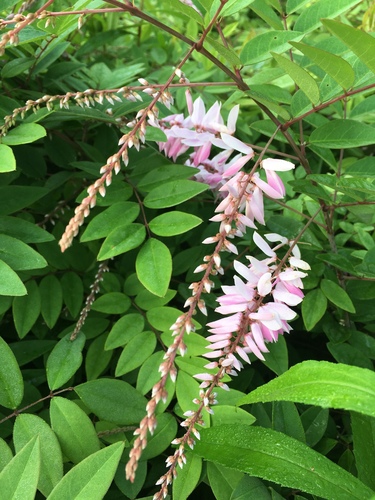
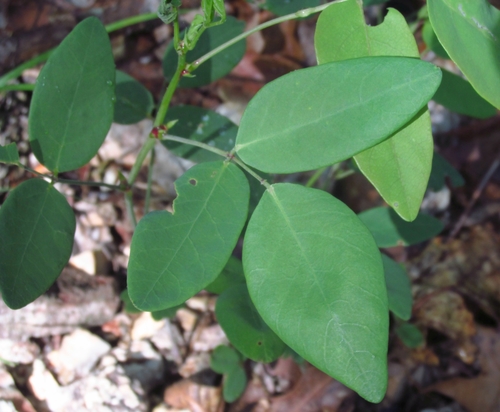
Desmodium laevigatum is an erect perennial plant species in the genus Desmodium. Its stems are glabrous to sparsely uncinulate-puberulent, and reach 0.5 to 1.2 meters in height. It produces terminal ovate to elliptic-oblong leaflets that are 3 to 9 cm long; leaflets are typically glabrous on their upper surface, glaucous on their lower surface, and have sparse puberulence concentrated mainly along the veins. The stipules are lance-attenuate and shed early, while the stipels are persistent. Its inflorescences are usually paniculate, and are moderately to densely covered with hooked hairs. Flowers have pink to purple petals measuring 8 to 10 mm, diadelphous stamens, and a densely puberulent calyx. The fruit is a stipitate loment made up of 2 to 5 subrhombic, densely hairy segments that are 5 to 8 mm long. The stipe of the fruit is longer than the calyx tube, but typically shorter than the remaining staminal remnants. This species shares the general traits of the Desmodium genus: entire leaflets, papilionaceous flowers that are subtended by bracts, and indehiscent, segmented legumes. Desmodium laevigatum ranges from southern New York west to Indiana and Missouri, and south to northern Florida, the Florida Panhandle, and Texas. It grows in fields, dry oak and pine forests, woodland borders, and disturbed areas. Across its range, it is relatively infrequent compared to other Desmodium species that occur in the same habitats. It has been observed growing in both frequently burned areas and fire-excluded areas.