About Descurainia pinnata (Walter) Britton
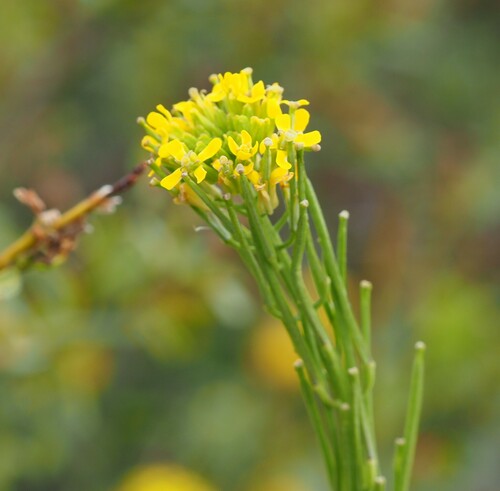
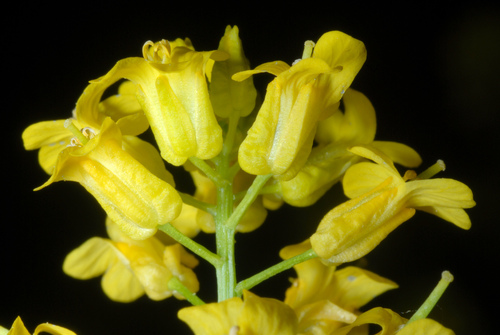
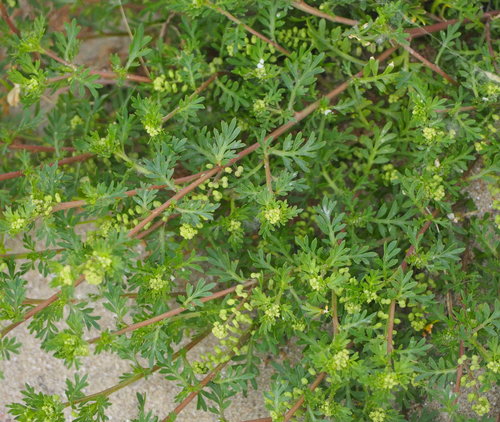
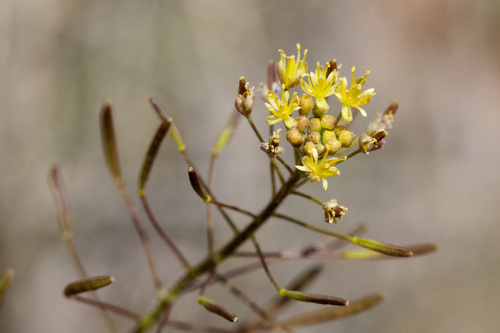
Descurainia pinnata (Walter) Britton is a species of flowering plant in the mustard family Brassicaceae, with the common names southeastern tansymustard and western tansymustard. It is native to North America, where it grows widely across many different types of habitat, and it thrives particularly well in deserts. This hardy plant easily grows as a weed, and readily sprouts in disturbed, barren sites with poor quality soil. It is a hairy, heavily branched annual mustard that has very variable appearance. Several subspecies exist that differ from one another, and even individual plants within the same subspecies can look different based on the climate they grow in. It can grow as a clumping thicket or a tall, erect mustard, and generally does not grow taller than 70 centimeters. Its leaves are highly lobed or divided, with pointed, toothed lobes or leaflets. Tiny yellow flowers grow at the tips of the plant's stem branches. The fruit is a silique that measures 0.5 to 2 centimeters long, borne on a threadlike pedicel. This plant reproduces exclusively from seed. When consumed in large quantities by grazing animals, this tansymustard is toxic due to the presence of nitrates and thiocyanates; however, it is nutritious when eaten in smaller amounts. Its flowers attract butterflies. The seeds have a flavor described as somewhat similar to black mustard, and they were used as food by Native American peoples including the Navajo.