About Derris trifoliata Lour.
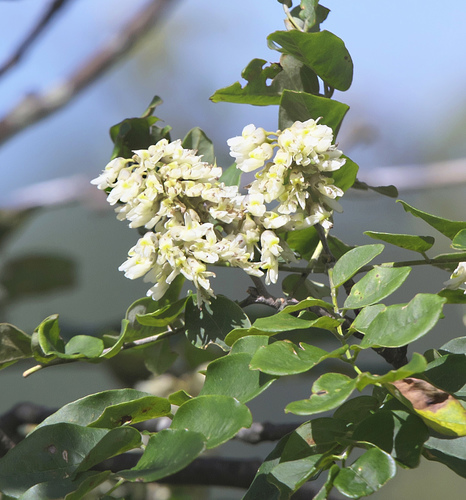
Derris trifoliata is a flowering plant species belonging to the legume family Fabaceae. It is common across India, where it has many regional common names: Angaar valli in Sanskrit; Karanjvel in Marathi; Firta in Konkani; Tigekranugu, Nauatige, and Chirathelathige in Telugu; Ketia and Swanlata in Oria; Kammattivalli and Ponumvalli in Malayalam; Kaliya lata (also spelled Kalilata) and Panlata in Bengali; and Panlata in Hindi. It is also common across multiple regions of Southeast Asia, with additional regional common names including Asiasimanan in Filipino Tagalog; Tuwa areuy in Indonesian Sundanese; Akar Ketuil, Ketui, Setui, Salang, Tuba bekut, or Sea Tuba in Peninsular Malaysian; Phak thaep in central Thai; and Cc Kn Nc (Cosc Kesn Nuwowsc) in Vietnamese. This species is a large climber that grows commonly in the coastal swamps of tropical coastal areas of Southeast Asia. Individuals typically reach 3–5 meters in length. Its leaves are alternate, pinnate, and measure 12–20 cm total; it bears 5 ovate leaflets per leaf, each 6–10 cm long, with acuminate tips and rounded bases. Its flowers are 1 cm across, arranged in axillary racemes 8–15 cm long. Its pods are 3–4 cm long, flat, and pale yellow in color. The rotenoid 6aα,12aα-12a-hydroxyelliptone can be isolated from the stems of D. trifoliata. In 1902, Kazuo Nagai, a Japanese chemical engineer working for the Government-General of Taiwan, isolated a pure crystalline compound from a closely related plant, possibly Derris elliptica. He named this compound rotenone, after the Taiwanese name of the plant 蘆藤 (pronounced lôo-tîn in Min Nan Chinese), which was translated to Japanese as rōten (ローテン). The pods, roots, and stems of Derris trifoliata are rich in toxic rotenoids. The plant is commonly used to produce insecticides, piscicides, and other pesticides, and suicide attempts or accidental ingestion have sometimes caused human illness or death. The larvae of the butterfly Hasora hurama feed on D. trifoliata.