About Deparia petersenii (Kunze) M.Kato
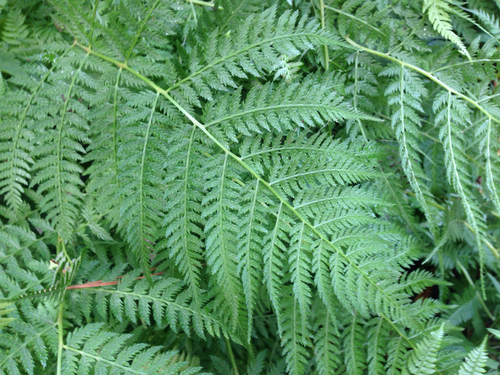
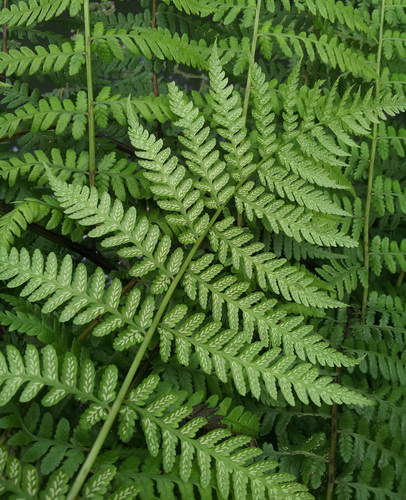
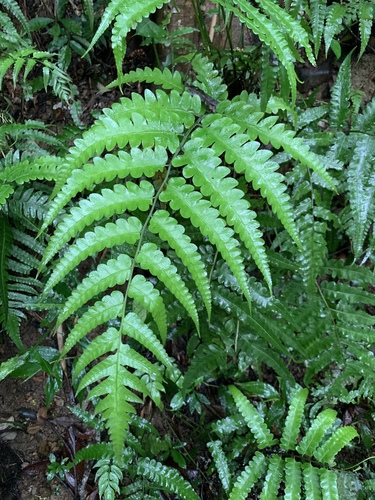
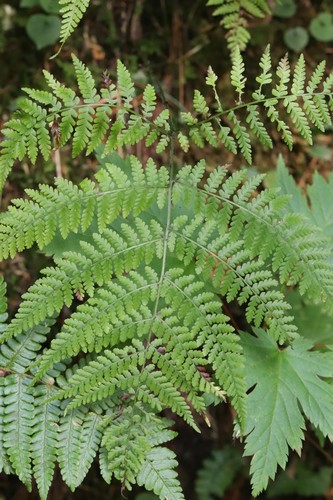
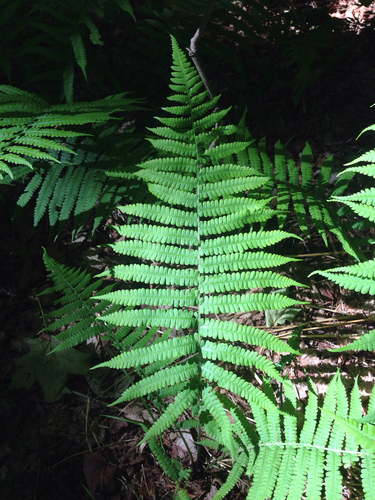
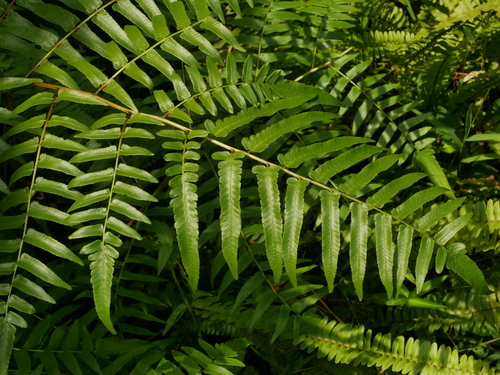
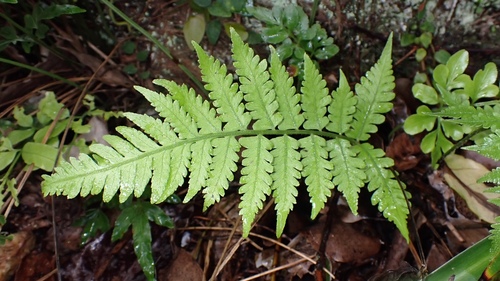
Deparia petersenii, commonly called the Japanese lady fern, is a species of fern. It typically reaches 12 to 24 inches (300 to 610 mm) in length, and grows 12 to 18 inches (300 to 460 mm) wide. This species does not produce flowers, and can be easily identified by the gray hairs that grow on the underside of its leaves. It is a perennial fern, and is an aggressive, fast-growing invasive species. It has long rhizomes, and is able to form thick ground cover. D. petersenii is sometimes cultivated, and can be purchased online, as it is not a regulated or prohibited species. This fern has a broad native distribution spanning East Asia, which includes Southwest, South Central and East China, Taiwan, South Korea, southern Japan, and the Bonin and Volcano Islands; South Asia, which includes India, Sri Lanka, Pakistan, Bhutan, and Nepal; and Southeast Asia, extending south to Australia, New Zealand, and Polynesia. Outside of its native range, D. petersenii is classified as an invasive species in Madeira, the Azores, southeastern USA, the Hawaiian Islands, southeastern Brazil, and Réunion. In the United States, it is found across Louisiana, Mississippi, Florida, Arkansas, Georgia, and Hawaii. According to the Invasive Plant Atlas of the United States, there are fewer than fifty total sightings of this species across these six states.