About Dendrocolaptes platyrostris Spix, 1824
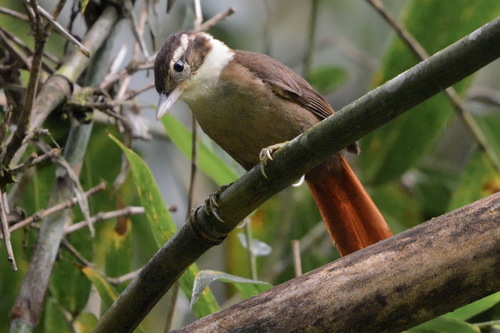
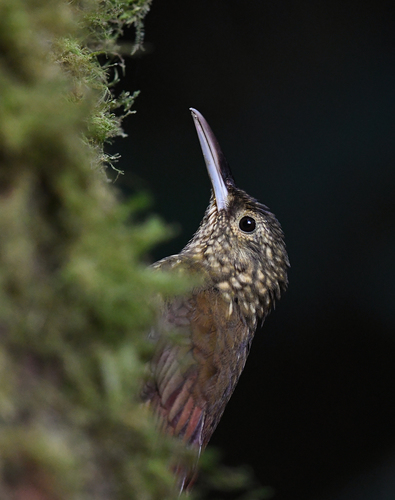
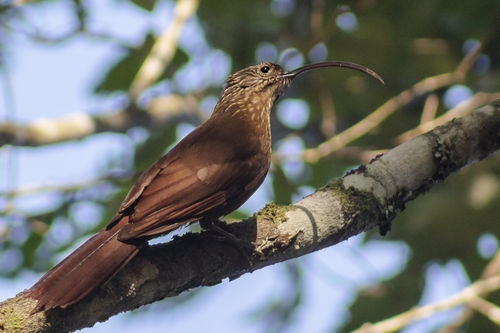
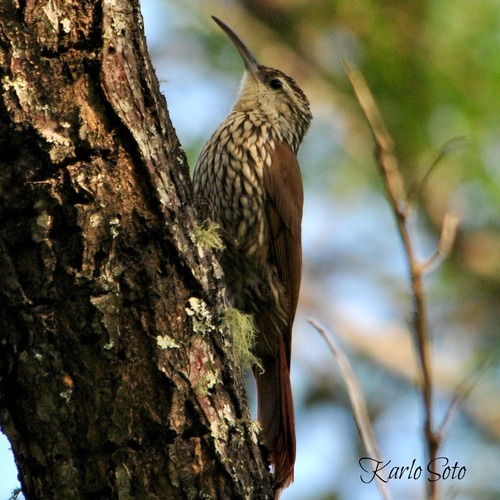
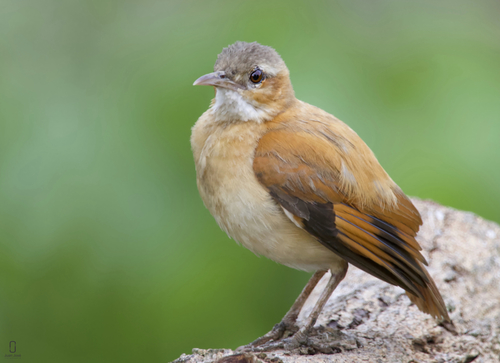
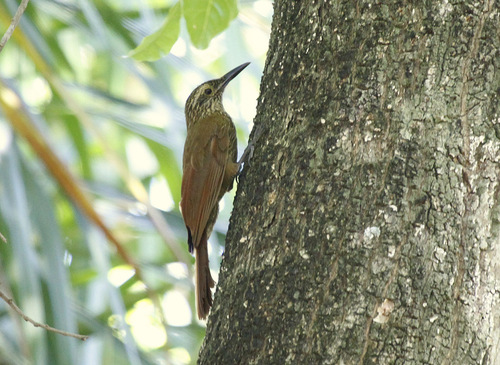
The planalto woodcreeper (Dendrocolaptes platyrostris Spix, 1824) is one of the larger species in its subfamily. It has a slim build, a long tail, and a medium-length straight bill. Adults measure 25 to 27 cm (9.8 to 11 in) in length and weigh 43 to 69 g (1.5 to 2.4 oz). Males and females have identical plumage.
Adults of the nominate subspecies have a dusky face marked with bold buffy streaks and a faint supercilium. Their forehead, crown, and nape are black, with bold buff streaks covering the crown and nape. Their back and rump are olive-brown with thin buff streaks. Their wings, uppertail coverts, and tail are dull chestnut, and the primaries have dusky tips. Their throat is whitish with faint streaking and mottling. Their breast is olive-brown with strong whitish buff streaks. Their belly, flanks, and undertail coverts are buffy brown with thin blackish bars. The iris is brown, the bill is black, the tip of the mandible is sometimes paler, and the legs and feet range from greenish gray to black.
Subspecies D. p. intermedius is paler than the nominate subspecies, with an overall more cinnamon color, a dusky brown or olive crown, few or no streaks on the back, and more rufous wings, rump, and tail. The two subspecies' plumages intergrade in the zone where their ranges meet.
The nominate subspecies is the more southerly of the two. It occurs in eastern and southeastern Brazil, from Bahia and Minas Gerais south through Rio Grande do Sul, extending into northeastern Argentina as far as eastern Corrientes Province and reaching just slightly into northeastern Uruguay. Subspecies D. p. intermedius is found further north and west, in northeastern, central, and south central Brazil, from southeastern Pará south to Mato Grosso do Sul and eastern Paraguay. The ranges of both subspecies extend east to the Atlantic coast.
The planalto woodcreeper lives in a variety of wooded landscapes. The nominate subspecies is mostly found in humid lowland and montane forests. D. p. intermedius occurs in drier habitats, including deciduous woodland, palm swamps, and gallery forest in relatively open caatinga and cerrado. This species prefers the interior of primary forest, but it is also found at forest edges and in mature secondary forest.