About Dendrocnide meyeniana (Walp.) Chew
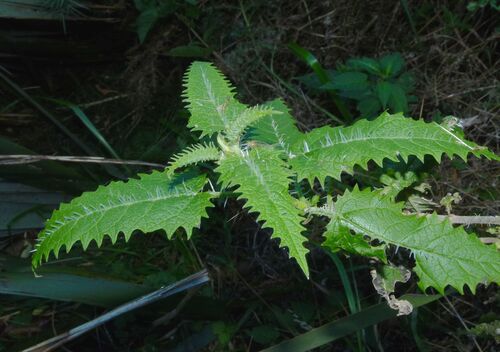
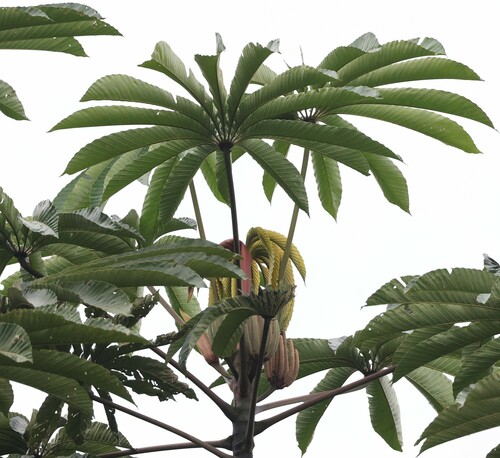
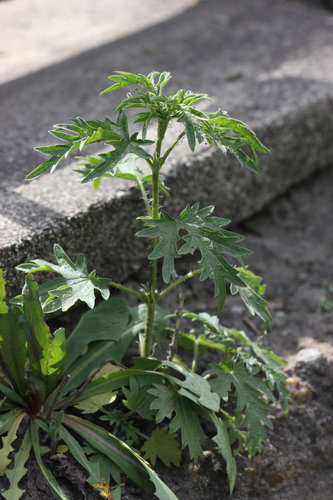
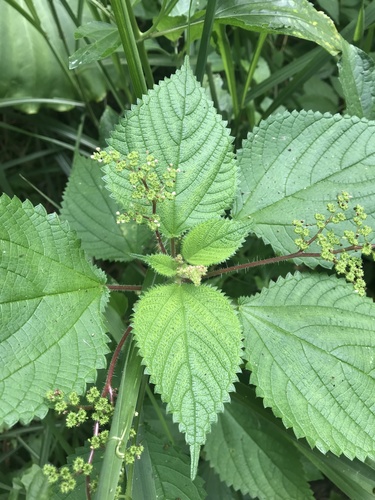
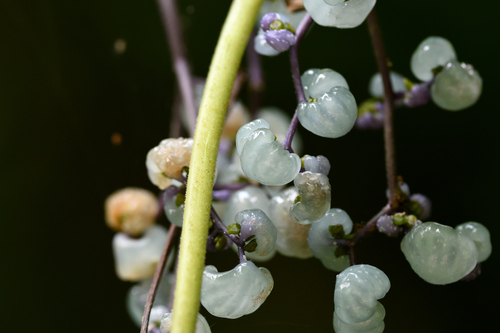
Dendrocnide meyeniana, commonly called the poisonous wood nettle, is a tree species belonging to the nettle family Urticaceae. It is native to thickets and secondary forests of Taiwan and the Philippines. Its specific epithet meyeniana honors Franz Meyen, who collected the type specimen in Manila while on a world cruise. In the Philippines, the city of Lipa in Batangas gets its name from this plant. Locals primarily identify it by the short stinging hairs that grow on its twigs. In Taiwanese Mandarin, it is widely known as yǎoréngǒu, a name that has been in use since the early Qing period, referencing the skin irritation or inflammation caused by its stinging hairs. Among the Paiwan and Puyuma peoples of Taiwan, both ethnic groups have a custom of whipping adolescents with this plant as a rite of passage or as corporal punishment. Contact between skin and the stinging hairs on Dendrocnide meyeniana's leaves, stems, inflorescences, or other plant parts may cause acute dermatitis. Its fruit and receptacle are edible, but the stalk is not edible, as it is covered in stinging hairs. The stinging hairs of D. meyeniana are short and hard to see with the naked eye; even though the leaves are densely covered in stinging hairs, they are not visible to the eye. In Philippine traditional medicine, a drink is prepared from this tree's sap to increase breast milk production. Its roots and leaves can also be used as a diuretic.