About Dendrelaphis punctulatus (Gray, 1826)
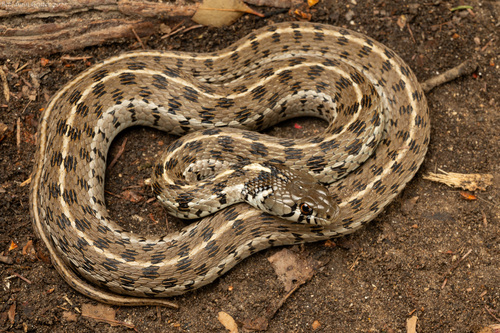
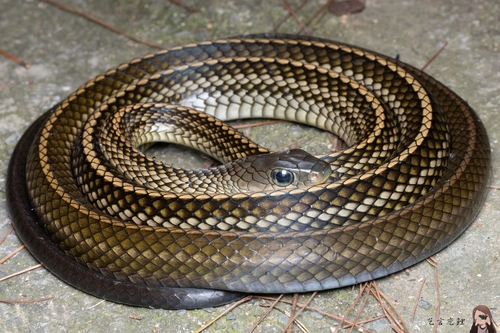
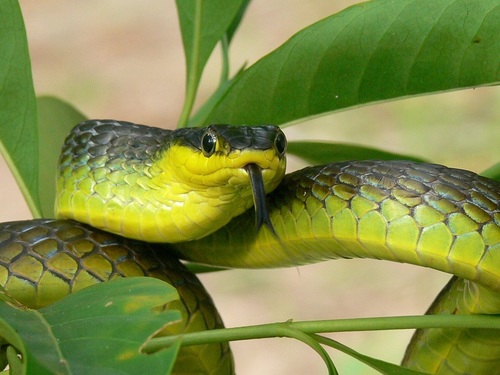
This description covers Dendrelaphis punctulatus, also called the common tree snake. A study of this species in Queensland found females have an average snout–vent length of 101 centimetres (40 in), while males are slightly shorter, averaging 93 centimetres (37 in). Different sources report different maximum total lengths for females: one indicates females can reach a maximum total length of 200 centimetres (79 in), while other sources give an overall maximum total length of 164 centimetres (65 in), which includes a 44 cm (17 in) long tail. This species has 24–26 maxillary teeth. Its dorsal scales are arranged in 13 rows at midbody. It has 191–220 ventrals, a divided anal plate, and 120–144 divided subcaudals. Dendrelaphis punctulatus is common in Australia's northern tropics and eastern Australia. Its range extends from the Kimberley region of Western Australia to Cape York and the Torres Strait in Queensland, continues down the east coast into New South Wales, and extends north into Papua New Guinea. The common tree snake inhabits a wide variety of habitats, including bushland, well-vegetated banks of rivers, creeks and streams, rainforest edges, eucalypt forests, heathland, and areas with trees, long grass, and lush vegetation, especially those located near water. It occurs at altitudes ranging from sea level to 500 m (1,600 ft). Based on public reports from the Darwin region, Dendrelaphis punctulatus has its peak activity period during the northern dry season, which runs from May to July. Dendrelaphis punctulatus is an oviparous species. Clutches laid by this species contain 5 to 12 elongated eggs.