About Delphinium consolida L.
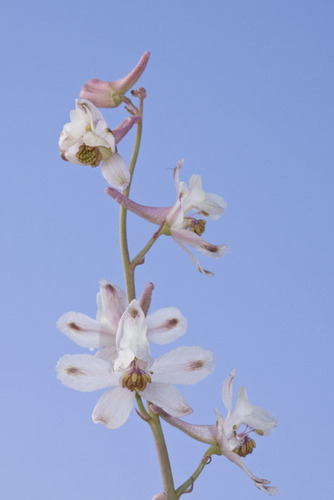
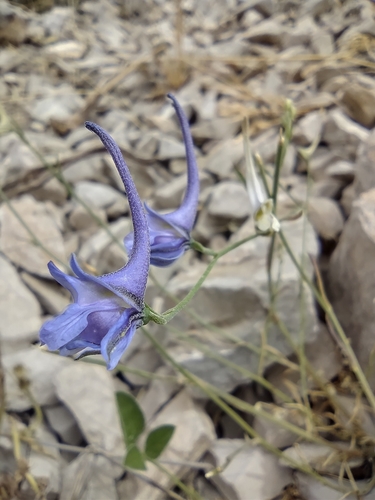
This species, also referred to as Consolida regalis, reaches an average height of 30–80 centimetres (12–31 in). It has an erect, hairy stem that is very branched at the top. Its roots can grow up to 50 centimetres (20 in) deep into soil, allowing the plant to survive long periods of drought. Its leaves are arranged alternately. The inflorescence is a cluster holding five to eight hermaphrodite flowers. The flowers are dark blue or purple and have five sepals; the upper sepal extends into a 15–18 millimetres (0.59–0.71 in) long spur that points backward. Each flower has eight to ten stamens. Its flowering period runs from May through August, and its flowers are pollinated by hymenoptera and lepidoptera. Seeds ripen from June through September. All parts of this plant are poisonous when consumed in large doses, especially seeds, which contain up to 1.4% alkaloids. Consolida regalis is native to Western Asia (Turkey, Georgia, western Siberia), Northern Europe (Denmark, Finland, Sweden, Estonia, Latvia, Lithuania), Middle Europe (Austria, Belgium, Czech Republic, Germany, Hungary, Netherlands, Poland, Slovakia, Switzerland), East Europe (Belarus, Estonia, Latvia, Moldova, European part of the Russian Federation, Ukraine), Southeastern Europe (Albania, Bosnia and Herzegovina, Bulgaria, Croatia, Greece, Italy, Macedonia, Montenegro, Romania, Serbia, Slovenia), and Southwestern Europe (France, Spain). It grows on sandy or chalky soils, at altitudes between 0 and 1,200 metres (0–3,937 ft) above sea level. It can be found in dry weedy places, roadside ditches, and cereal crop fields. Due to increased herbicide use and intensive soil cultivation, this plant has become quite rare in central and southern Europe. This species is also grown as an ornamental plant.