About Delphinium barbeyi (Huth) Huth
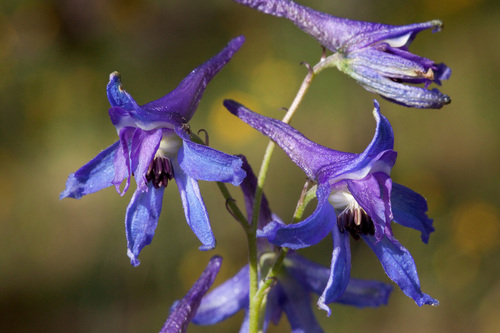
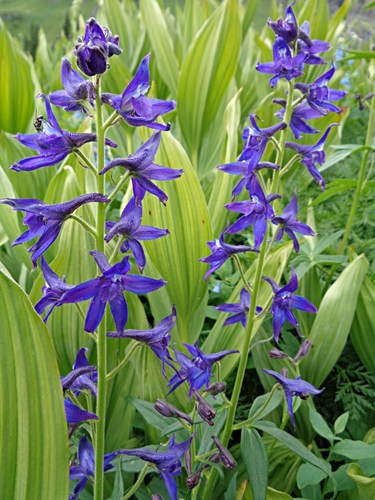
Delphinium barbeyi is a flowering plant species in the buttercup family, commonly known as subalpine larkspur, tall larkspur, and Barbey's larkspur. It is native to the interior western United States, where it occurs in Arizona, Colorado, New Mexico, Utah, and Wyoming. This species is a perennial herb that grows up to 1.5 meters tall. Leaves grow along the stem, but disappear from the lowest part of the stem by the time the plant blooms. The leaves are somewhat rounded in outline and divided into several lobes. The tall inflorescence can hold up to 50 flowers at a time, though a single plant may produce hundreds of flowers total. Each flower grows on a pedicel up to 6 centimeters long. The flower has five dark purple-blue sepals with whitish or yellowish hairs on the inside. The fruit is a follicle that can reach up to 2.2 centimeters in length. The plant is long-lived, and can live for more than 75 years. It grows in wet habitat types in subalpine and alpine climates, and is a dominant member of the herb layer in many locations. It can often be found growing beneath aspen trees. This Delphinium species commonly hybridizes with its relative, Delphinium glaucum; hybrids may be more common in the habitat than individuals of the parent species. The hybrid is sometimes called duncecap larkspur (Delphinium × occidentale). D. barbeyi also hybridizes with Delphinium ramosum and D. sapellonis. Bumblebees and hummingbirds feed on nectar from the flowers of this species. Observed visiting species include the bees Bombus nevadensis, Bombus insularis, Bombus appositus, and Bombus flavifrons, and the hummingbirds Selasphorus platycercus, Selasphorus rufus, and Stellula calliope. Both groups of pollinators prefer larkspurs that have the largest flower displays. The sphinx moth Hyles lineata and anthomyiid flies also visit the flowers. All members of the genus Delphinium are toxic to humans and livestock. Many larkspur species are known to be poisonous and hazardous to livestock. This species is notorious as one of the most common toxic plants responsible for livestock deaths, especially cattle fatalities on rangelands in Colorado and Utah. Sheep are much less susceptible to its toxicity. In areas where this larkspur and its hybrids are common, up to 15% of a cow herd can be lost to poisoning. This causes losses of millions of dollars for ranchers. The abundance of this larkspur has led ranchers to remove their livestock from some rangeland areas, or only use the land at certain times of year. The plant contains many toxic alkaloids. The alkaloids barbinine and barbinidine were first isolated from this species. The most toxic compounds are (methylsuccinimido) anthranoyllycoctonine (MSAL) diterpenoids. It is estimated that a fatal dose of alkaloid is contained in approximately two kilograms of dry plant material. Poisoning causes paralysis, and death results from respiratory paralysis. Toxicity reactions in animals, sometimes called larkspur toxicosis, can be treated with physostigmine. Ranchers sometimes try to kill this larkspur using the herbicide tebuthiuron. Glyphosate and picloram have been shown to be effective in research trials, but these chemicals also kill non-target plants, which accelerates the invasion of weeds into the habitat.