About Delosperma cooperi (Hook.fil.) L.Bolus
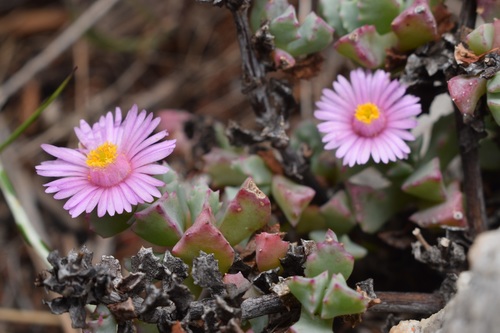
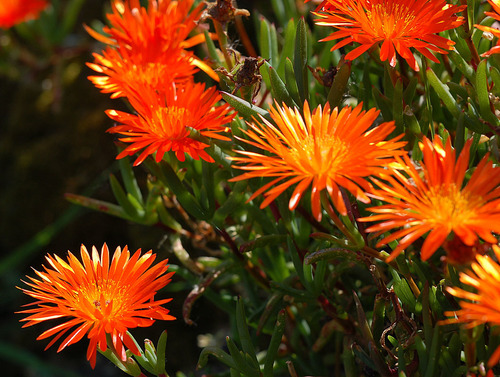
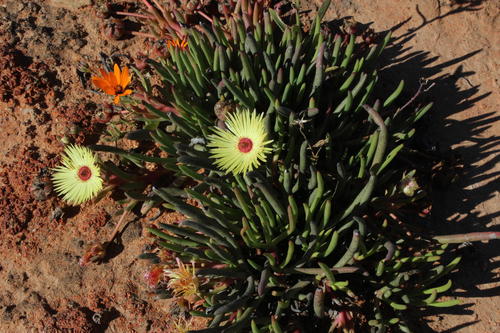
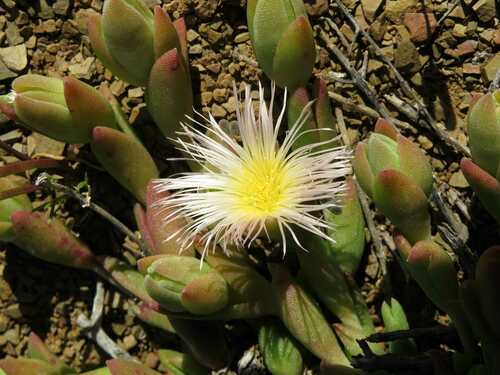
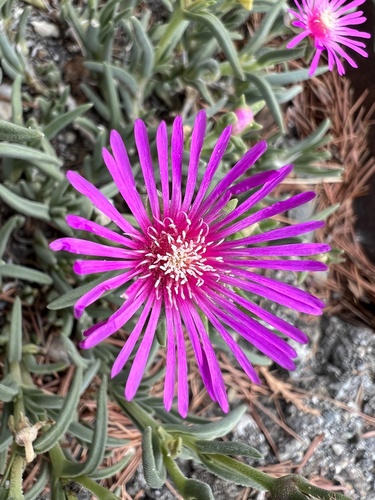
The most striking feature of Delosperma cooperi is its abundant bright flowers, which come in shades of vermillion, magenta, or pink and often cover the entire growing area. This trait gives the plant its popular common name "pink carpet". It has branched spreading stems that bear opposite, long and narrow leaves, and small solitary flowers develop at stem tips. These flowers measure 3 to 5 cm (1 to 2 inches) in diameter, are abundant, long-lasting, and bloom from June to October. This is a sun-loving species that thrives in very dry, hot conditions. While it adapts to a range of soil types, it cannot tolerate standing water, so it prefers well-drained soils or even rocky terrain. According to University of Arkansas Research and Extension, its native habitat has little grass competition, so it is most often found in dry, salt-tolerant rocky sites. New Mexico State University Extension explains that the common name "ice plant" comes from bladder-like hairs on leaf surfaces that reflect and refract light to make the foliage look like it sparkles with ice crystals. This trait certainly applies to Mesembryanthemum crystallinum, though many other succulent species commonly called ice plants grown as ground cover have smooth, hairless leaves. Delosperma cooperi can be cultivated across a wide range of areas with a Mediterranean climate. Unlike many other ice plants, this species is hardy to −20 °F (−29 °C), and successfully overwinters in locations such as Denver, Colorado and Chicago, Illinois. Its leaves turn red during cold winter temperatures. Because it requires very little maintenance, it is well suited for urban environments and high temperature regions. It often grows in large, extensive patches. Its trailing stems also make it a good choice for flowerpots and terraces. To propagate this plant, take a cutting without flowers, remove a few bottom leaves, and replant it in the same soil. Delosperma cooperi leaves contain the hallucinogenic chemicals DMT and 5-MeO-DMT, which can be extracted from the leaves. The concentration of these chemicals changes throughout the year: 5-MeO-DMT content rises during the summer, while DMT content rises during the winter. In South Africa, this plant is used to prepare khadi, an alcoholic wine. The plant's roots are involved in the fermentation process, while the leaves are the key source material for khadi production. There is no scientific evidence to support claims of any medicinal benefits from this use. The plant's interaction during fermentation changes its chemical components, converting sugar into oxalic acid, which is extremely toxic when ingested. Both Bantu people and Europeans also use this plant as a source of yeast for making beer.