About Deinbollia oblongifolia (E.Mey. ex Arn.) Radlk.
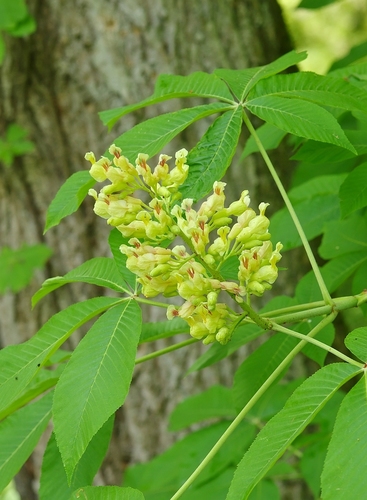
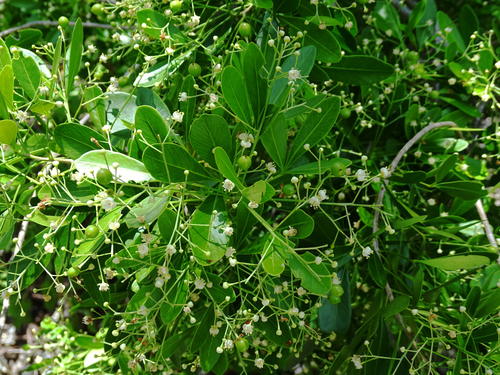
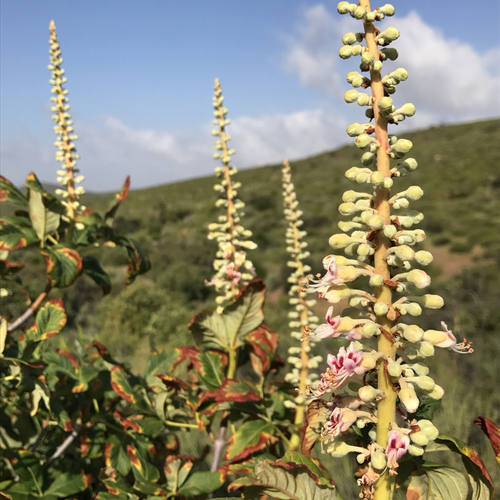
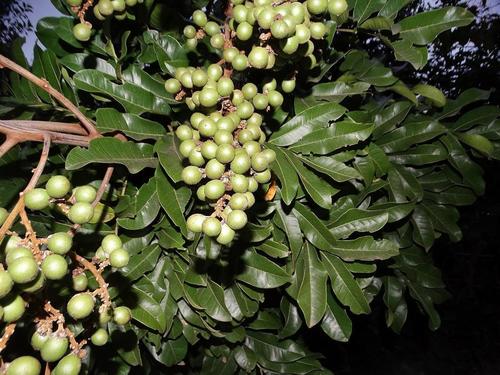
Deinbollia oblongifolia, commonly known as dune soap-berry, can grow up to 9 metres (30 ft) tall. Its stem often branches low to the ground, and its bark is grey-brown. It has compound leaves that reach up to 50 centimetres (20 in) in length, clustered at the ends of branches. Its flowers are white or cream, borne on branched flowering heads at the ends of branches. The fruit is rounded; it is green and velvety when young, turning yellow and smooth when ripe. Dune soap-berry may be mistaken for young forest mahogany (Trichilia dregeana) because the two species have similarly shaped compound leaves. However, dune soap-berry has paler green, slightly matte leaves, while forest mahogany has darker green, more glossy leaves. Mature leaves of dune soap-berry also have a hard texture, and are not held flat like the leaves of Trichilia dregeana. The fruit of Deinbollia oblongifolia is eaten by people. Its leaves can be eaten as spinach, and its seeds can be lathered in water to be used as soap, which gives the species its common name "soap-berry". The roots are used in traditional Zulu medicine to treat stomach complaints. This shrub is also a valuable garden plant, especially for wildlife gardens.