About Deinacrida rugosa Buller, 1871
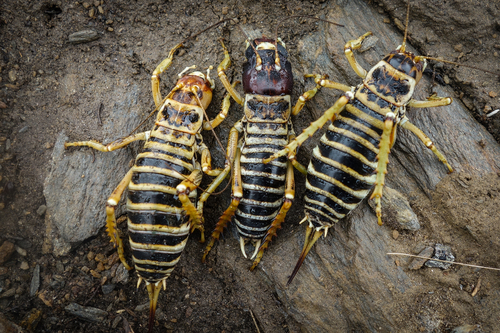
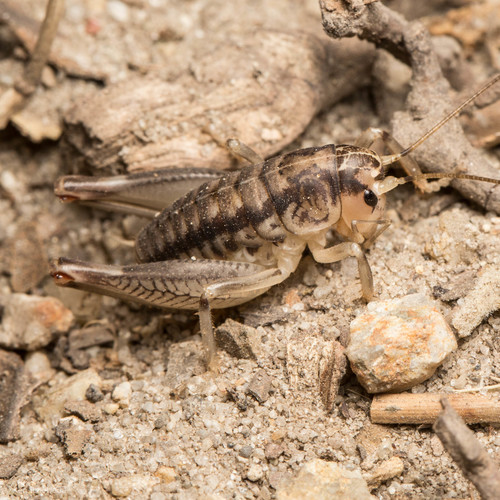
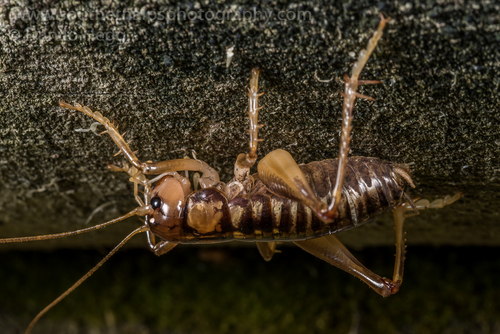
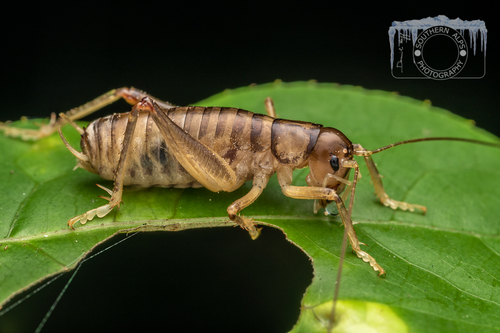
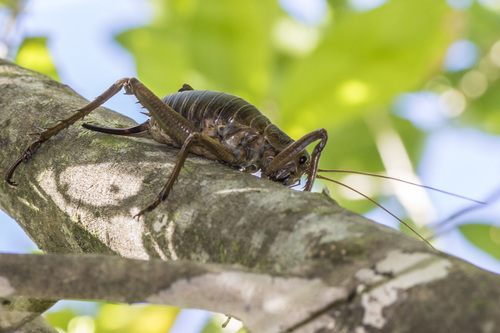
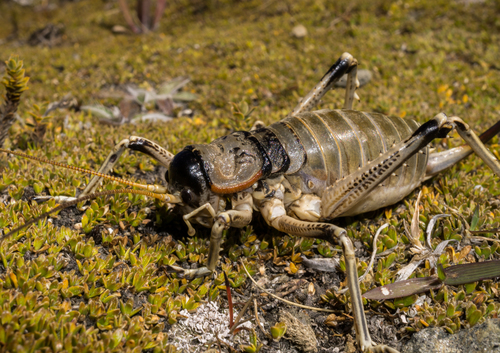
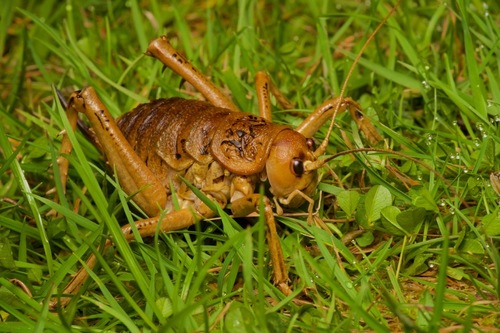
Deinacrida rugosa Buller, 1871, commonly known as the Cook Strait giant wētā, is one of the largest insects in the world. This species can reach a maximum length of 7 centimetres (2.8 in). Its bulky, heavily armoured body is brownish-yellow; the upper body surface is covered with a series of thickened, overlapping black-marked plates. Relative to its head size, its jaws are large. Its elongated hind legs, which bear five or six large spines, can be raised above the head as a defence. Females are significantly larger than males, and both sexes are wingless. The Cook Strait giant wētā is endemic to New Zealand. Its natural range is restricted to the New Zealand islands of North Trio, South Trio, Middle Trio, Stephens, Maud, Matiu/Somes and Mana. This species had been extinct on mainland New Zealand for over 100 years until it was reintroduced there in 2007; wild populations can now be found at Zealandia Wildlife Sanctuary in the North Island. It occupies open grassland, shrubland and forest margin habitats.