About Deilephila porcellus Linnaeus, 1758
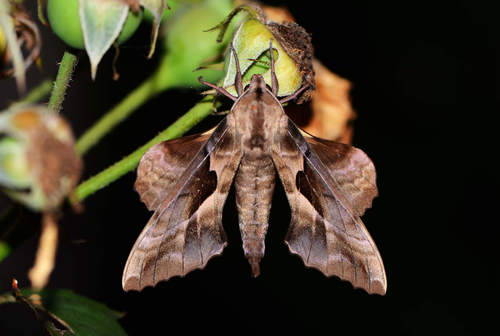
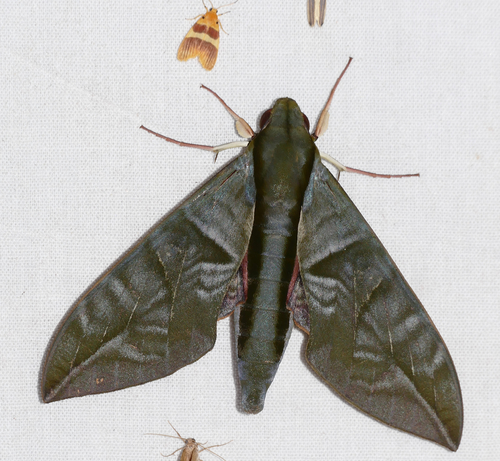
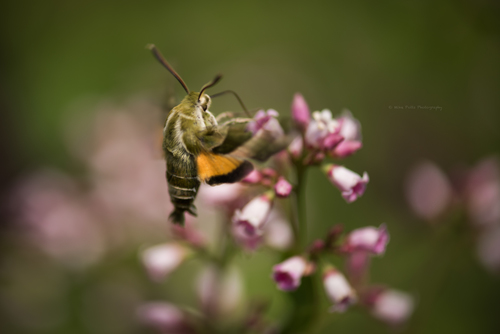
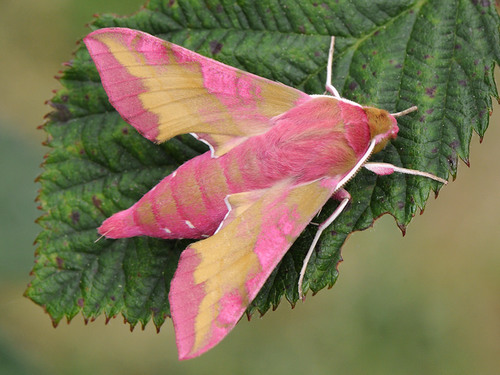
Deilephila porcellus Linnaeus, 1758 is a moth with a wingspan of 45–51 millimeters (1.8–2.0 in). Adults fly from May to July, with flight timing varying by location. Its forewings are ochreous with a faint olive tinge; the front margin is edged and blotched with pinkish color, and a broad but irregular band of this same pinkish color runs along the outer margin. The upper margin of its hindwings is blackish, the outer margin is pinkish, and the area between is ochreous tinged with olive. The wing fringes are chequered whitish, sometimes with a pink tinge. The head, thorax, and body are pinkish, more or less variegated with olive; the thorax bears a patch of white hairs above the base of the wings. This species shows high variability in coloration. In the drier, warmer, arid regions of Asia Minor and Central Asia, pink coloration is completely absent. The form rosea Zerny is intermediate in color; the form indistincta Tutt is pinkish grey; the form suellus is yellowish sandy buff. The larva is greyish brown or darker grey, shifting to yellowish brown on its front body rings. The head is a darker grey than the rest of the body. It lacks the typical horn found in most sphingid moths, and has a double wart in the horn's place. In early instars, the caterpillar is pale greyish green with blackish bristles, and its head and underside are yellowish. Larvae feed on plants in the Galium and Epilobium genera. This moth is distributed across Europe, North Africa, and West Asia. It occurs in coastal areas, heaths, and meadowland edges in Europe where Galium plants grow. It can be found up to 1600 m in elevation in the Alps and Spain, and up to 2000 m in North Africa and Turkey. In central Iran and central Asia, it inhabits open, arid montane forest or scrub, usually at elevations between 2000 and 2500 m.