About Deeringothamnus rugelii (B.L.Rob.) Small
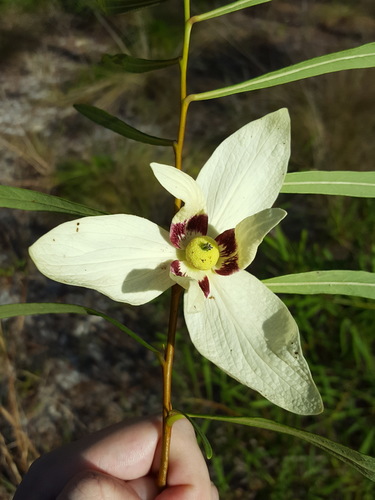
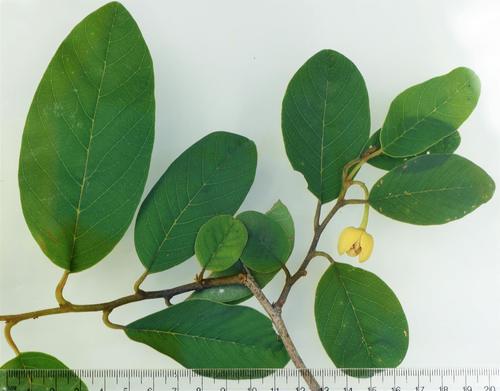
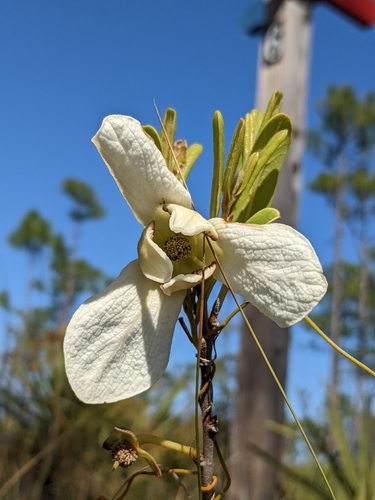
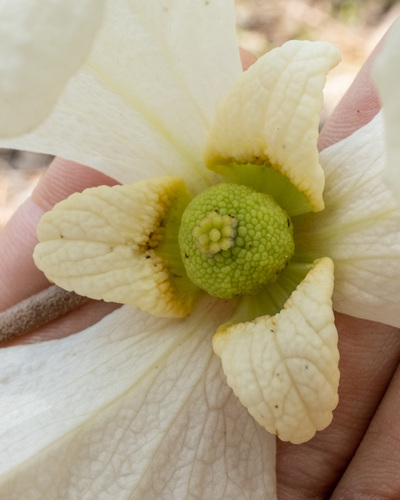
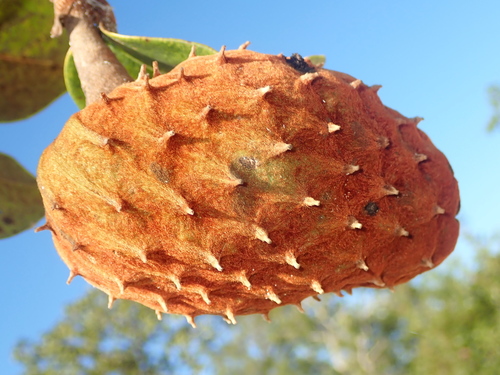
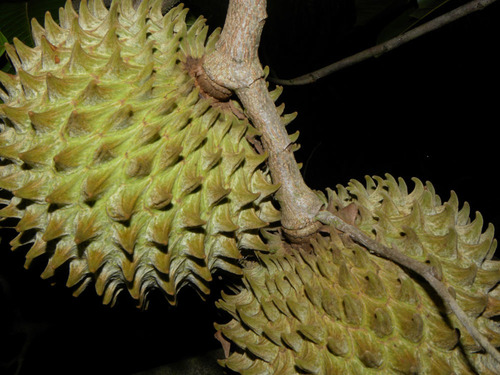
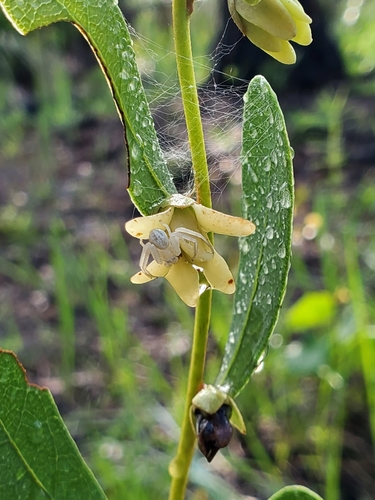
Asimina rugelii, previously classified under the genus Deeringothamnus, is a rare flowering plant in the custard apple family. Its common names include Rugel's pawpaw, Rugel's false pawpaw, and yellow squirrel banana. This species is endemic to Volusia County, Florida, in the United States, where fewer than 5,000 plants remain in severely fragmented habitat. Around 23 separate occurrences of the plant are currently found in Volusia County, some located within Tiger Bay State Forest. This is a small shrub that grows from a taproot, reaching no more than half a meter in height. It has leathery, somewhat oblong or lance-shaped leaf blades that grow up to 7 centimeters long. The inflorescence is a single flower that nods or grows upright on a short peduncle. The lightly scented flowers usually have six fleshy petals that can be yellow, cream, or purple, and measure 2 to 3 centimeters long. The flower fragrance is described as "rubbery," and is produced by several compounds including ethyl benzoate, trans-β-ocimene, limonene, and germacrene. This plant's pollen is released as permanent tetrads. It produces a large yellow-green berry that can grow up to 6 centimeters long; a single flower can produce multiple fruits. Each berry holds a few seeds that are around one centimeter long or slightly larger. A. rugelii can be distinguished from Asimina pulchella by differences in the width, shape, and color of its petals. It sometimes hybridizes with its relative, Asimina pygmaea. This species grows in slash pine woods on wet, sandy substrates, growing alongside other plant species including saw palmetto, fetterbush (Lyonia lucida), shiny blueberry (Vaccinium myrsinites), dwarf live oak (Quercus minima), and wiregrass (Aristida stricta). Phylogenetic research has moved this species back into the genus Asimina. The main threat to A. rugelii is habitat destruction and degradation. The Volusia County region is increasingly urbanized and developed, with wild habitat cleared for residential, commercial, and agricultural uses such as pine plantations and turfgrass farms. Remaining habitat fragments are degraded by a number of processes, particularly fire suppression. This plant is fire-dependent; its natural habitat is maintained by periodic wildfire, and fire is required to clear larger vegetation and brush to give the plant adequate sunlight, and fire has been shown to increase the plant's flower production. Other threats include invasive exotic plant species such as Bahia grass (Paspalum notatum). The species was federally listed as an endangered species in 1986.