About Datura ceratocaula Jacq.
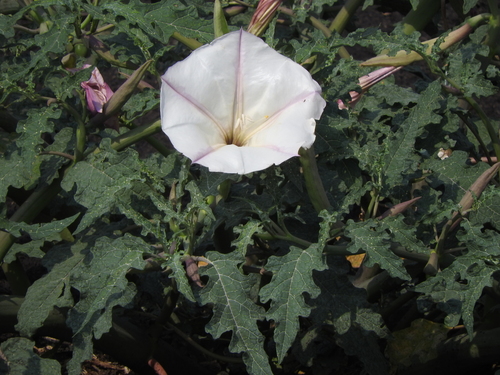
Datura ceratocaula Jacq. is a species in the Datura genus. It grows with a weedy habit in its native range, but is cultivated in gardens and yards as an ornamental plant. Its flowers produce a sweet scent. It is an annual plant native to Mexico. In its natural habitat, Datura ceratocaula grows in shallow water or swamps. It has a hollow gray-green stalk that reaches between 12 and 36 inches long, with toothed, wavy ovate-lanceolate leaves that have hairs on their undersides. This plant’s broad, funnel-shaped flowers bloom from June to September. The flowers are white with a blue tint on the outer surface, and range from white to pink on the inner surface. Unlike the seed pods of most Datura species, the seed pods of this species are not thorny; instead, they look like inverted eggs and dangle from the plant. The species’ scientific epithet ceratocaula means "horn stem", referring to its stalks that are curved like an animal horn, and these stalks fork less often than the stalks of other Datura species. All parts of Datura plants contain dangerous levels of poison and can be fatal if eaten by humans or other animals, including livestock and pets. Buying, selling, or cultivating Datura plants is prohibited in some regions. The toxicity of Datura ceratocaula can move up the food chain. A duck species that lives in swamps and lagoons near Mazatlán has poisonous meat; eating this meat is known to cause poisoning or drug-like symptoms, a problem that was long unexplained. This toxicity is now confirmed to come from Datura poisoning: the ducks eat the leaves and seeds of Datura ceratocaula, and their flesh accumulates toxic levels of poison from this diet.