About Dasyprocta leporina (Linnaeus, 1758)
Size and Sexual Dimorphism
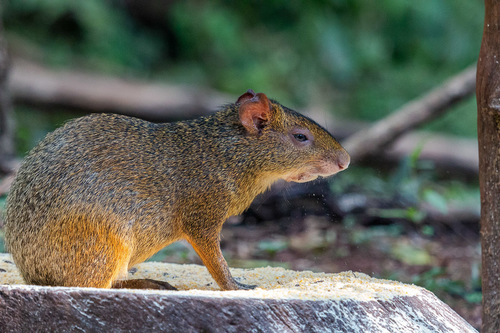
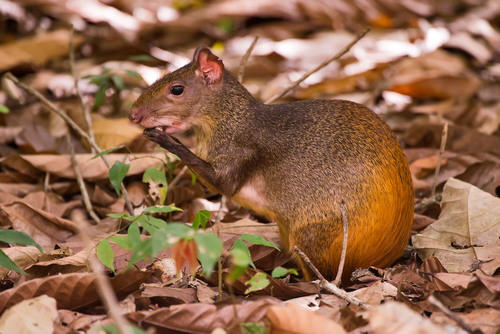
The red-rumped agouti (Dasyprocta leporina) weighs 3 to 6 kilograms (6.6 to 13.2 lb), and measures 48 to 64 cm (19 to 25 in) in length. Females are larger than males, but the sexes are similar in appearance otherwise.
Body Coloration
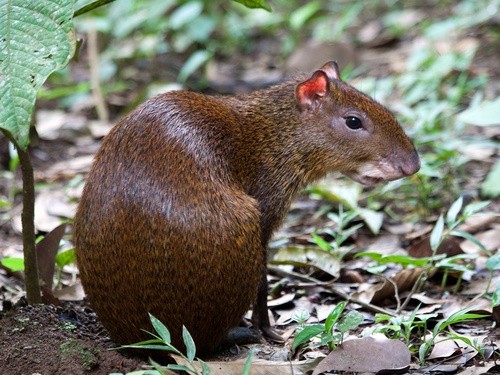
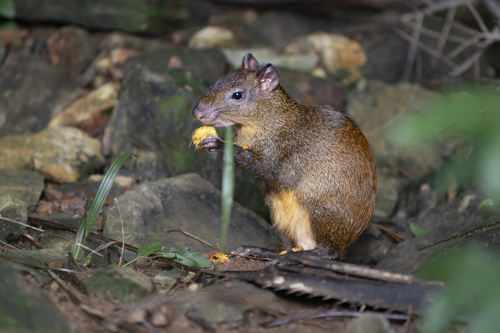
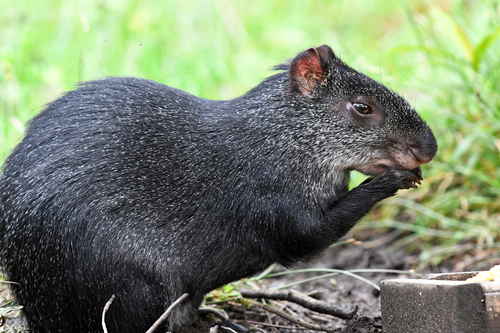
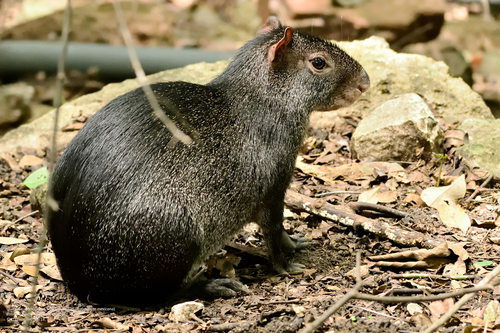
The species is brownish with darker spots on the upper body; its fur becomes more orange moving down the midsection of the body.
Limb and Ear Morphology
Its ears are somewhat square-shaped. Front feet have four toes each, while hind feet have three toes each.
Species Distinguishing Features
It can be told apart from other agouti species by its distinct coloring.
Breeding Cycle
It has no set breeding season; females enter breeding condition twice per year, and typically produce between one and four young per litter.
Gestation and Weaning
Gestation lasts 104 to 120 days, and young are weaned on average after 20 weeks.
Social Structure
Red-rumped agoutis live either in pairs, or in family groups made up of parents and their offspring.
Captivity Requirements
They require large areas for feeding, breeding, and territory, which makes keeping this species difficult in captivity.
Lifespan
Individuals live 15 to 20 years in captivity.
Native Distribution
This species is native to northeastern South America, occurring primarily in Venezuela, Guyana, Suriname, French Guiana, and northeastern Brazil, as well as the Caribbean islands of Trinidad and Tobago and Saint Lucia.
Introduced Distribution
It has also been introduced to Florida, the U.S. Virgin Islands, Grenada, and Dominica.
Habitat
It occupies a wide range of forest habitats, including rainforest and secondary forest.