About Daphne odora Thunb.
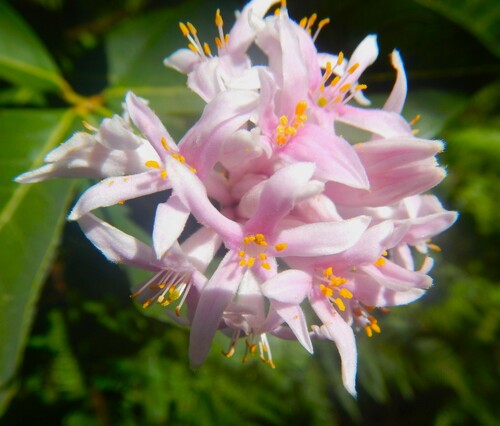
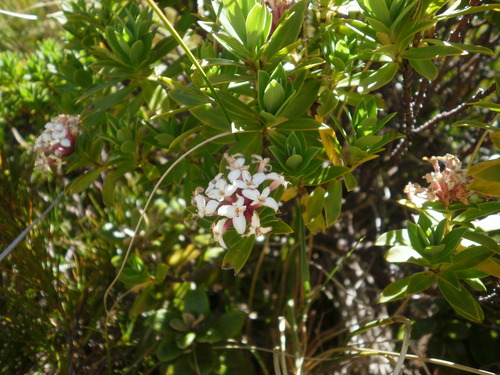
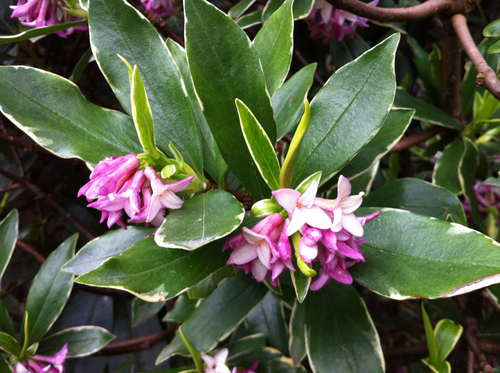
Daphne odora, commonly called winter daphne, is a flowering plant species in the family Thymelaeaceae. It is native to China, and later spread to Japan and Korea. It is an evergreen shrub, cultivated for its highly fragrant, fleshy pale-pink tubular flowers that each have four spreading lobes, as well as for its glossy foliage. It rarely produces fruit, growing red berries after it finishes flowering. The Latin specific epithet odora translates to "fragrant". In Korea, the plant has the poetic name "chullihyang" meaning thousand-mile scent, a name that references the pleasant fragrance of its flowers. In Japan, the plant is most commonly known as "jinchōge". This species grows best in fertile, slightly acidic, peaty, well-drained soils. It tolerates full sun or partial shade, and is hardy to −10 °C (14 °F), and possibly to even lower temperatures. Plants of this species are not long-lived, typically surviving for eight to ten years. Daphne species generally do not tolerate root disturbance well, and D. odora often transplants poorly. D. odora is also susceptible to virus infections, which cause leaf mottling. All parts of Daphne odora are poisonous to humans and a variety of domestic animals. Some people develop dermatitis after coming into contact with the plant's sap. Daphne odora can be propagated using semi-ripe cuttings taken in summer.