About Daphne mezereum L.
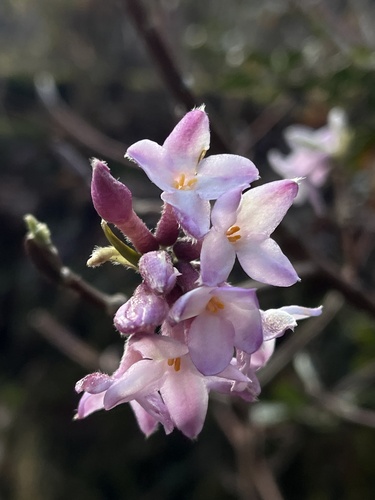
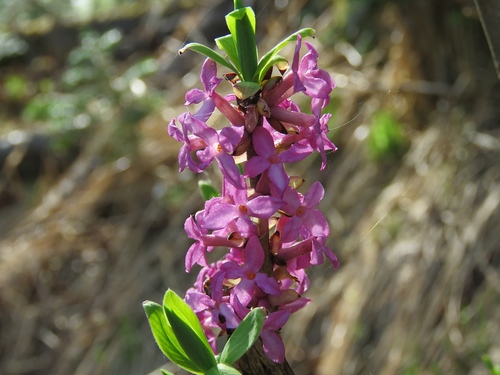
Daphne mezereum L. is a deciduous shrub that reaches 1–1.5 metres (3–5 ft) in height. Its leaves are soft, glabrous, 3–10 cm long and 1–2 cm broad, and arranged spirally along the stems. Flowers develop on bare stems in early to mid spring (February to May, or later at high altitudes) just before or as new leaves emerge. They form clusters of two to four per bud that form wreaths along the stems. The flowers are sessile, with a four-lobed pink or light purple (rarely white) perianth 10–15 mm in diameter, and have a strong, pleasant scent. Unlike Daphne laureola, Daphne mezereum is self-fertile, meaning it can produce fruit without cross-pollination from a second individual. Its fruit is a bright red drupe 7–12 mm in diameter, which is yellow in plants that bear white flowers. This fruit is very poisonous to humans, but fruit-eating birds such as thrushes are immune to its toxicity; they eat the drupes and disperse the plant's seeds via their droppings. Daphne mezereum is very toxic due to the compounds mezerein and daphnin, which are concentrated most in the berries and twigs. Poisoning causes a choking sensation in affected people, and handling fresh twigs can trigger rashes and eczema in sensitive individuals. Despite its toxicity, it is commonly grown as an ornamental plant in gardens for its attractive, strongly scented flowers. When any part of the plant is ingested, symptoms develop within a few hours: they start with severe irritation and a burning sensation in the mouth, along with swelling of the lips and face, increased salivation, hoarseness, and difficulty swallowing. These initial symptoms are quickly followed by severe abdominal pain, headache, numbness, nausea, and bloody diarrhoea. Children, who may be poisoned after eating the attractive red fruit, often develop additional narcotic symptoms accompanied by muscular twitching. Research conducted by Frohne and Pfänder found that the chewed seed, rather than the fruit pulp, is what causes severe symptoms from berry poisoning.