About Danaus eresimus (Cramer)
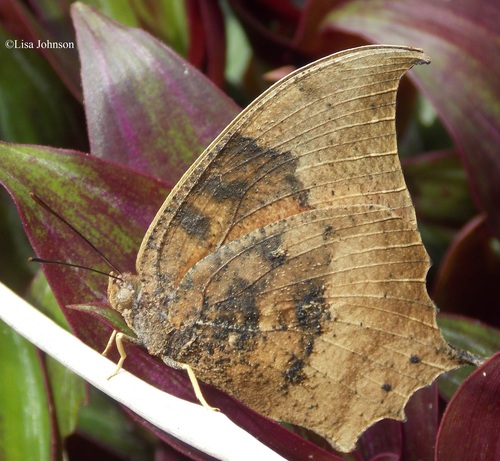
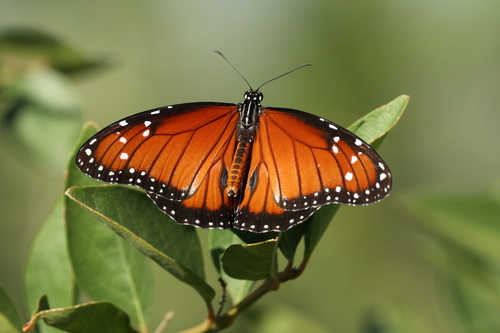
Danaus eresimus, commonly called the soldier, has dark reddish brown upper wing surfaces. The forewing sometimes bears white submarginal spots, and the wing veins are lightly marked with black. Males have a black scent patch on each hindwing. The lower wing surface is also dark brown, with a postmedian band formed of squarish spots. This species has a wingspan ranging from 2+1⁄2 to 3+1⁄2 inches, or 64 to 76 mm. The subspecies D. e. flexaure, previously classified as the separate species D. flexaure, has more white markings on the underside of its hindwings. The soldier can be found in a variety of open, subtropical habitats, including citrus groves, weedy water edges where host plants grow, and dry fields. During mating, males patrol to find females. Eggs of this species are bright orange. Full-grown larvae are black, with bands of white and yellow stripes, and a subdorsal row of yellowish-tan spots. They have six black, fleshy filaments: the first pair is near the head, the second is on the thorax, and the third is at the end of the abdomen. The chrysalis is very similar to that of the monarch butterfly, and is often indistinguishable from it. The species produces three or more broods per year. Recent field studies conducted in Oaxaca, Mexico identified Telminostelma foetidum, a member of the Apocynaceae family, as both a larval host plant and a nectar source for Danaus eresimus. This discovery expands the known range of host plants used by the species, which was previously recorded only from Asclepias and related genera.