About Dahlia merckii Lehm.
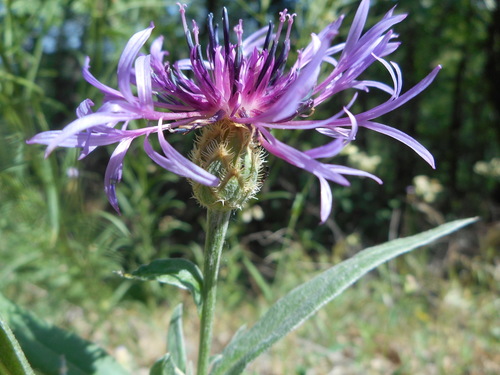
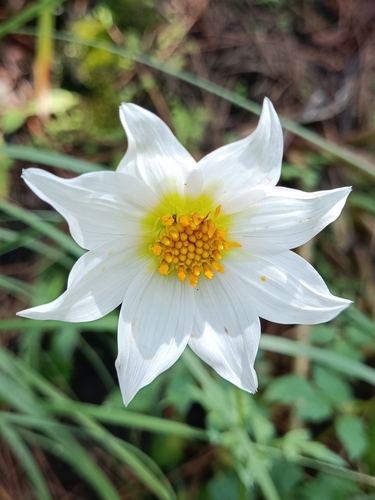
Dahlia merckii, commonly known as Merck's dahlia, is a tuberous perennial flowering plant that belongs to the daisy family, Asteraceae. This herbaceous plant reaches a height of 2.5 metres, or 8 feet. It has divided leaves, and produces single flowers in shades of lilac, white, and pink from late summer through autumn. Native to Mexico, this species is only hardy in milder regions that do not experience prolonged frosts. In these mild areas, its tubers can remain in the ground year-round, but they need mulch protection during the dormant season. In regions that do get prolonged frosts, the tubers must be dug up and stored over winter. The tubers begin sprouting in spring, but the new sprouts must be protected until all risk of frost has passed. Propagation of this species is done via seed or cuttings planted in spring. Dahlia merckii is unique among Dahlia species for its chromosome count of n = 27, and for containing rare acetylenic compounds. One of these compounds is a newly discovered hydrocarbon, heptadeca-1,7,9,13,15-pentaen-11-yne. These acetylenic compounds may have chemotaxonomic significance, and could play a role in the plant’s natural defense mechanisms.