About Dactylorhiza sambucina (L.) Soó
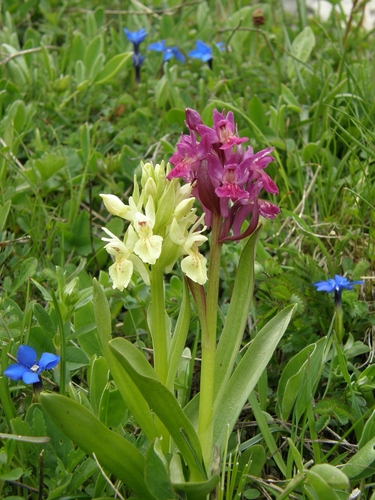
Dactylorhiza sambucina, commonly known as the elder-flowered orchid, has an average height of 10–40 centimetres (3.9–15.7 inches). It is a bulbous geophyte that grows from underground tubers, which produce new stems, leaves, and flowers each year. Each individual plant produces 4 to 7 amplexicaul leaves. Lower leaves are oblong-obovate with obtuse apexes, while upper leaves are lanceolate with acute apexes. Leaves range from 1 to 2.5 centimetres wide and 6 to 12 centimetres long. The underground stem holds two tubers, each more or less deeply lobed, which is a defining characteristic of the genus Dactylorhiza. The older tuber supplies nutrients to the current growing stem, while the younger secondary tuber collects nutrients to develop next year’s new plant. Its inflorescence forms a dense spike of flowers that is 5–10 centimetres (2.0–3.9 inches) long. Flowers grow from the axils of membranous, lanceolate-shaped bracts. Flowering occurs from mid-April to early July. Flower color varies: blooms can be yellow with light reddish stains, or purple with darker spots on the labellum. Flowers are hermaphrodite and pollinated by insects (entomophily), most commonly bumblebees of the Bombus genus. This orchid produces almost no nectar, but pollinators visit it after confusing it with other nectar-producing plants. Seed germination requires the presence of specific symbiotic fungi. Dactylorhiza sambucina is common and widespread across most of Europe, ranging from Portugal eastward to Finland and Ukraine. It is not found in the British Isles, the Low Countries, or the Dinaric Alps, and occurs less frequently on the northern side of the Alps. The elder-flowered orchid grows in both fresh and dry meadows, including subalpine and alpine grasslands, as well as open light woodland, clearings, and scrubland. It can grow on both siliceous and calcareous substrates. Its typical elevation range is 300–2,000 metres (980–6,560 feet) above sea level, though local populations (such as those in Uppland, Sweden) can be found at sea level. Its germination behavior, plant longevity, and soil requirements have recently been reviewed for the "Biological flora of Europe".