About Dactylorhiza incarnata (L.) Soó
Nomenclature and Origin
Dactylorhiza incarnata, commonly known as the early marsh-orchid, is a perennial orchid species native to temperate climates.
Habitat and Elevation
It typically grows in wet meadows on base-rich soils, at elevations up to approximately 2100 meters above sea level.
Distribution Range
This species has a wide distribution across Europe and Asia, ranging from Portugal and Ireland eastward to Siberia and Xinjiang.
Taxonomic Complexity
It has multiple subspecies and known hybrids, which make identifying the species more challenging.
Plant Height
Overall, individual plants reach heights between 15 cm and 70 cm (5.9 to 28 inches).
Stem and Flower Spike
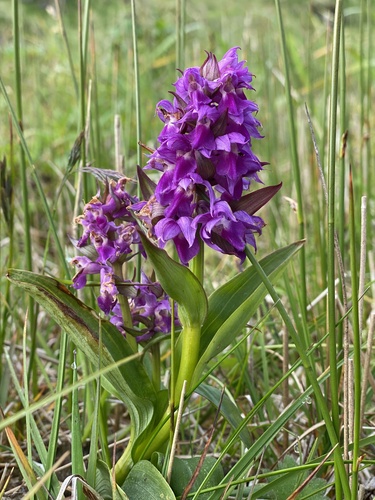
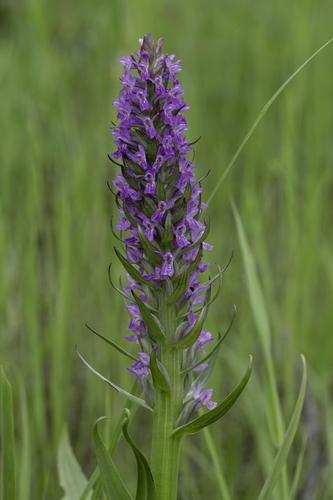
Typically, the flowering spike grows from a robust hollow stem 25–60 cm (9.8–24 in) tall, and can bear up to 50 flowers.
Leaf Characteristics
Plants produce 4–7 erect yellowish-green leaves with hooded tips.
Inflorescence Size
The full inflorescence measures 4–12 cm (1.6–4.7 in) long, and holds up to 50 blooms.
Labellum Structure
The flower's labellum appears long and narrow because its sides are strongly reflexed, or folded back, and its tip is shallowly three-lobed.
Flower Coloration and Markings
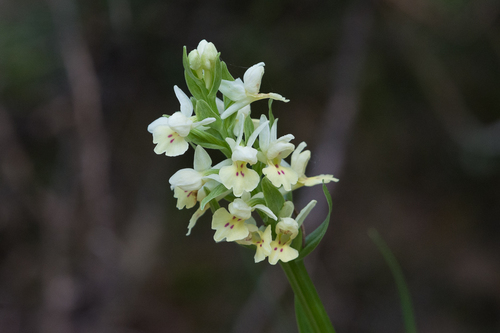
Flowers are most often flesh-coloured, which matches the meaning of the species epithet incarnata, and the labellum usually has distinct loop-shaped markings.
Flowering Period
Flowering occurs from May to mid-July, with timing varying by latitude and subspecies.