About Cyrtostachys renda Blume
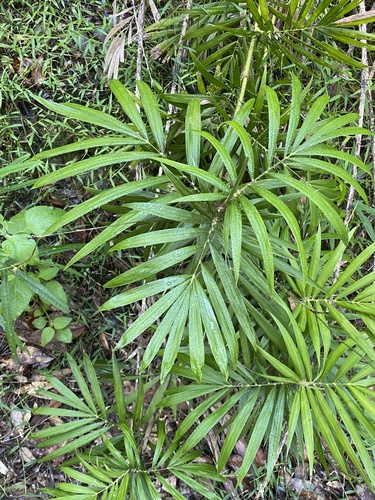
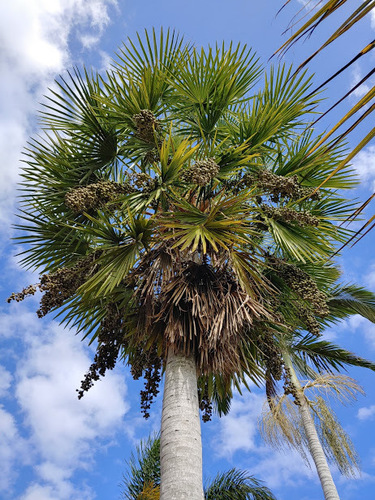
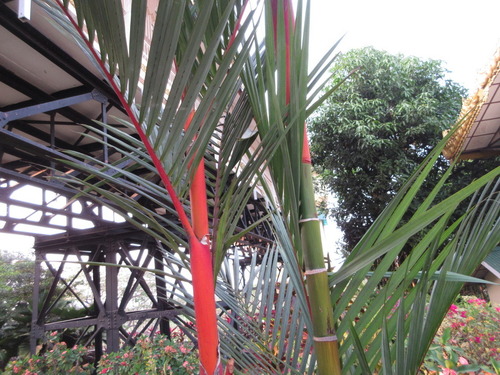
Cyrtostachys renda Blume, also called red palm, rajah palm, and pinang rajah in Malay, is a slender, multi-stemmed, slow-growing clustering palm tree. It can reach 16 metres (52 feet) in height. What sets it apart from all other Arecaceae species is its scarlet to bright red crownshaft and leaf sheath. Its stipe can grow up to 10 centimetres (3.9 inches) in diameter. Its petioles reach up to 15 centimetres (5.9 inches) long, and its pinnate leaves bear around 50 pairs of pinnae. The fruits are ovoid, 1.4 centimetres (0.55 inches) in diameter; they start green and turn dark bluish-black when ripe. Commonly known as lipstick palm, it is generally cultivated for its brightly colored, unusual foliage, and is a highly sought-after plant for gardening and landscaping projects. Due to propagation difficulties and its striking color, this palm has sold for prices as high as 1000 USD to collectors and gardeners. It also has limited traditional uses: in Pahang and other parts of Malaysia, it is used for flooring materials, roof thatching, and making darts. Some rural communities in Sumatra harvest the plant to obtain palm hearts. Propagation can be done using fresh seeds, which germinate slowly, or through dividing suckers. In the wild, the most suitable growing conditions for this species are found in Southeast Asian lowland peat swamp forests with specific soil traits: good drainage, high sand content, a thin peat layer, a low carbon to nitrogen (C/N) ratio, low acid and nutrient levels in soil and water, and relatively high organic substance levels. The palm grows well in full sun or shade, but requires humid conditions and well-draining soil. It can also tolerate flooding and grow in standing water, since its native habitat is peat swamp forests. It cannot tolerate cold temperatures or drought; it is classified for hardiness zone 11 or above, and is suited to tropical rainforest or equatorial Köppen Af climates, which do not have a significant dry season.