About Cyrtomium falcatum (L.fil.) C.Presl
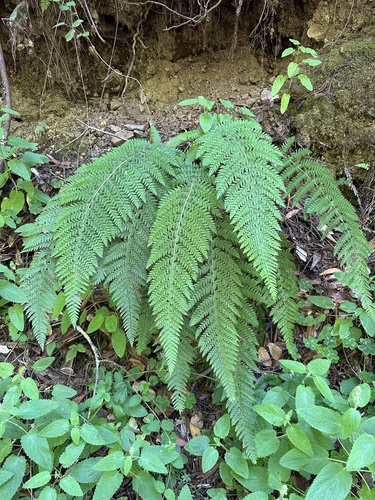
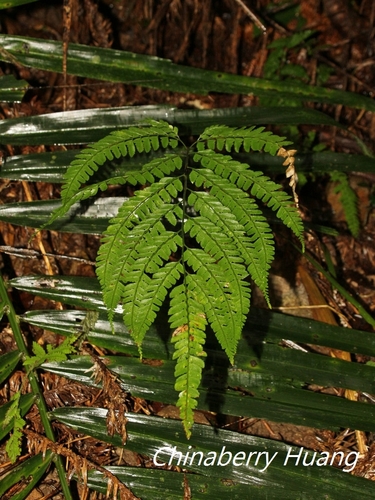
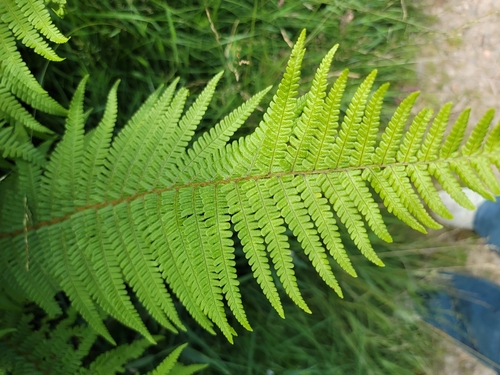
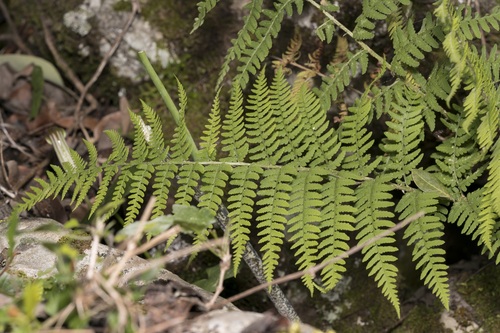
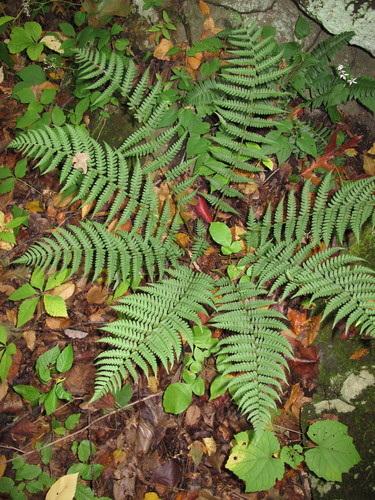
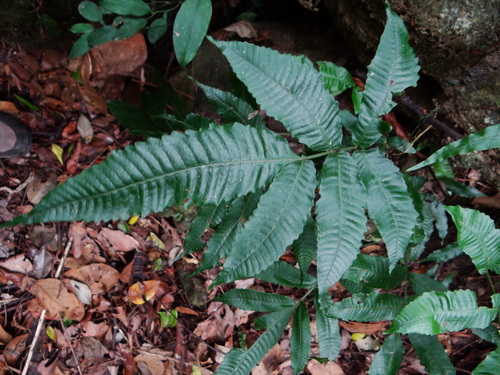
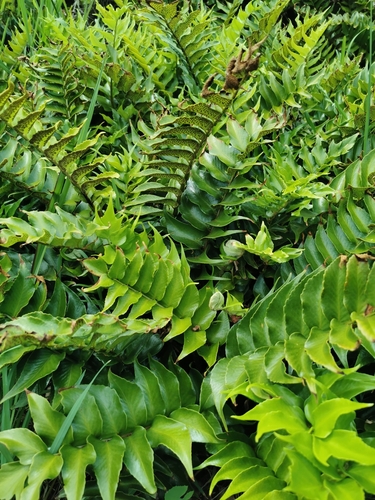
Cyrtomium falcatum, also called holly fern, is a perennial fern that grows from a large, light brown rhizome. Its leaves grow longer than 0.5 metres (1.6 ft), and each leaf is composed of six to ten pairs of shiny, bright green leaflets. Every leathery leaflet has a margin that ranges from flat to wavy to slightly toothed, and displays a net-like pattern of veins. On the underside of each leaflet, sori are covered by brown or black indusia. Cyrtomium falcatum is a fairly common outdoor ornamental plant in temperate climates, specifically hardiness zones 7 to 10, such as the coastal counties of California. In areas with very cold or very hot conditions, it is more commonly grown as an indoor houseplant. Compared to many other more tropical fern species, holly fern is reliably hardy. When grown outdoors, it thrives in locations with low indirect light to deep shade, such as under trees or bushes. This fern can be propagated by spores, but it is more commonly multiplied through rhizome division. Fresh cuttings are rooted in a well-aerated substrate such as coconut fiber or sphagnum moss. Cuttings should be kept evenly moist and shaded, and must not be left standing in pooled water. Whether planted in containers or in the ground, holly ferns are not particular about soil composition or quality. Like other ferns, they can even grow when mounted or tied to driftwood, wooden boards, tree branches or rocks, as long as some sphagnum moss or other organic medium surrounds the rhizome and rootball, and the plant gets enough water. While soil quality is not very important, good drainage and aeration alongside sufficient moisture retention are required. Fertilization is not needed, as holly ferns are minimal feeders, but an application of granular, time-released plant fertilizer once or twice per year may be beneficial. This species has received the Royal Horticultural Society's Award of Garden Merit. Holly fern has escaped from cultivation in some regions of the world, and has become established in the wild as an introduced species. It can now be found across most of Mediterranean Europe, North America, the Atlantic Islands, Australia, New Zealand, and South America, and it is classified as a weed in most of Australia.