About Cyrtocarpa edulis (Brandegee) Standl.
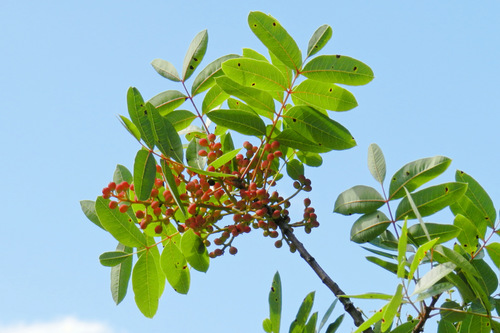
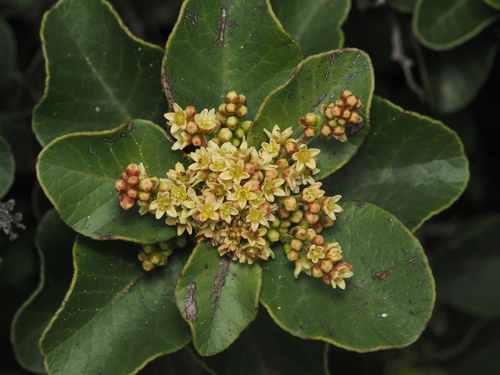
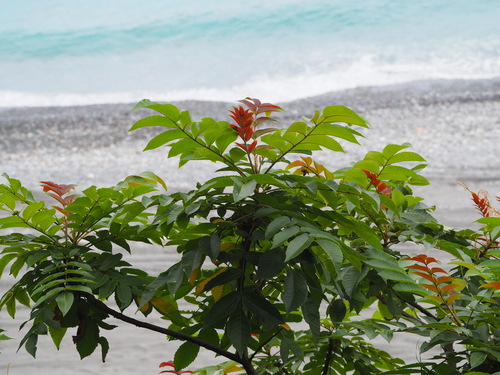
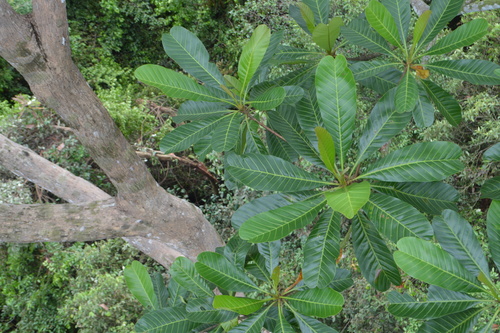
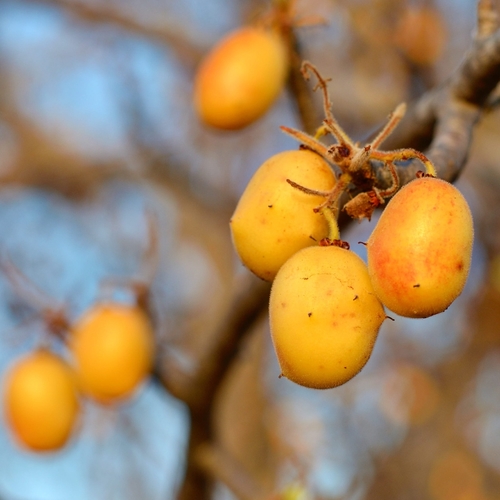
Cyrtocarpa edulis (Brandegee) Standl. most often grows as a spreading tree or shrub reaching 5 to 8 meters in height. It has smooth, light-grey bark and a thick, succulent trunk that can grow up to 2⁄3 of a meter in diameter. Plants growing on sand dunes may develop a prostrate growth habit. Its leaves are pinnately compound, measure 4 to 10 cm long, and are made up of 7 to 11 ovate or elliptic leaflets. The species is dioecious, and its flowers are white with a green tinge; female flowers have 5 petals that are 1.5 to 3 mm long. The fruit is an oblong to ovoid drupe 1.5 to 2 cm long, which turns green to yellow when ripe.
This species occurs most commonly in the Cape Region of Baja California Sur, and can be found in mountain ranges from the southern Sierra de la Giganta to Los Cabos. It also grows on the adjacent islands of San Jose, Espiritu Santo, and Cerralvo in the southern Gulf of California. It is frequently found on sandy plains and slopes, and often grows in arid tropical forests or in areas of deep soil in the mountains. In foothill habitats, it is intolerant of shade, and in highland areas it is sensitive to low winter temperatures.
This species was introduced to horticulture through the Huntington Botanical Gardens International Succulent Introductions program in 2021. It can be propagated from either seed or cuttings, since its branches are sufficiently succulent to root. Its edible fruit is used by local people. Its drought-tolerant nature may make it a viable fruit crop for arid land.