About Cyrioides imperialis (Fabricius, 1801)
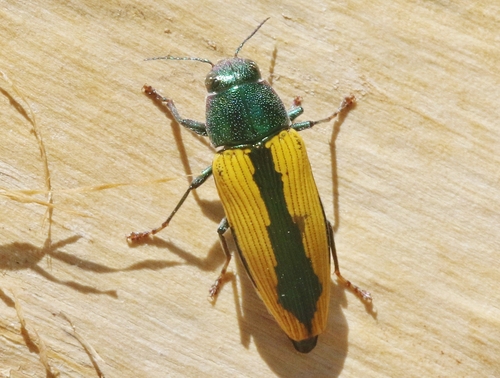
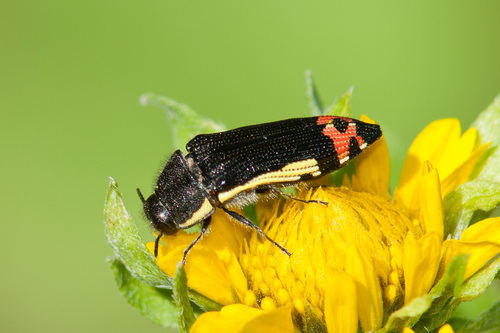
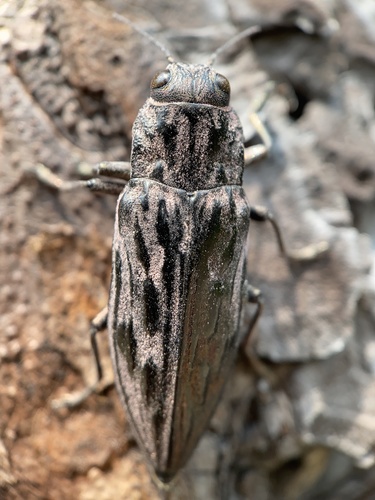
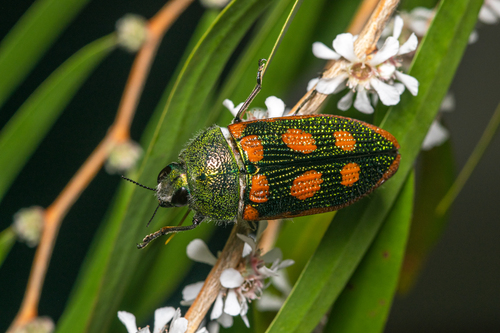
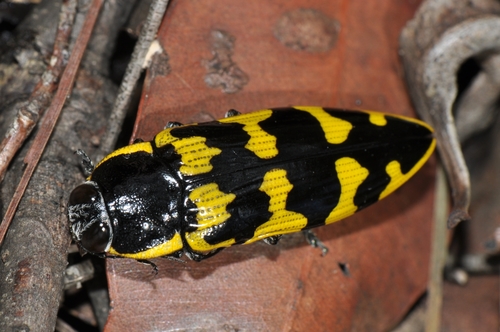
Cyrioides imperialis, commonly called the banksia jewel beetle, is a species of jewel beetle belonging to the family Buprestidae, native to southeastern Australia. It was first formally described by Danish naturalist Johan Christian Fabricius in 1801, and it retains its original scientific name to this day. Adult individuals of this species reach 3.8 centimeters (1.5 inches) in length, have an elongated body shape, and display a distinct gold and black coloration. Female banksia jewel beetles lay their eggs inside tree bark; once the larvae hatch, they tunnel into the tree’s wood. Multiple species of the genus Banksia act as host plants for both the larval and adult life stages of this beetle, specifically including Banksia serrata, Banksia integrifolia, and Banksia marginata. Additional recorded host plants for adult beetles are Banksia spinulosa, Leptospermum polygalifolium, and species from the genus Isopogon.