About Cyperus rotundus L.
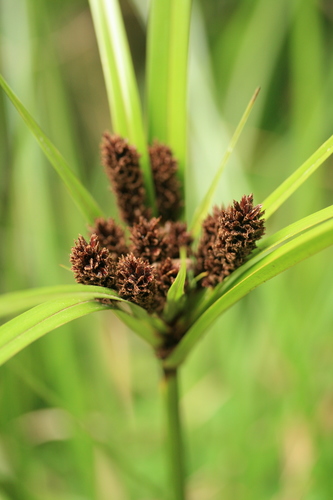
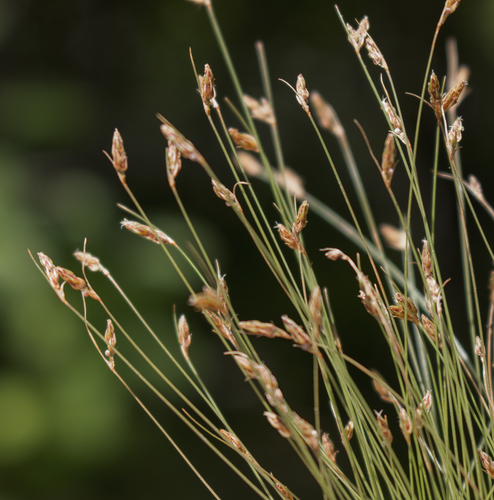
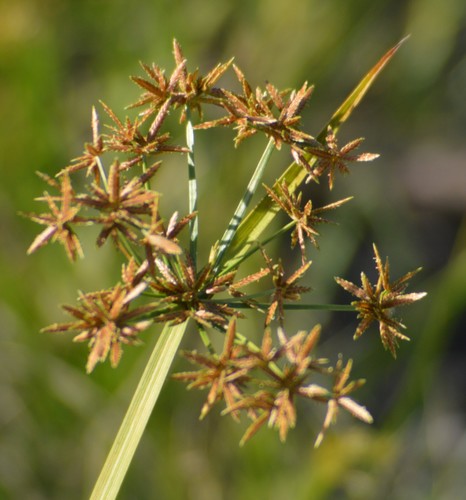
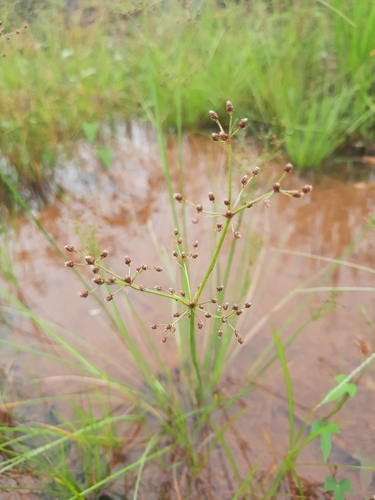
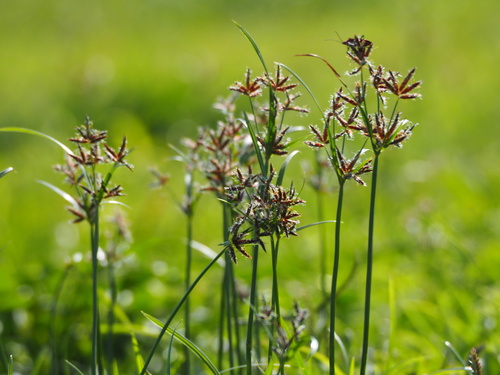
Cyperus rotundus L. is a perennial plant that can grow up to 140 cm (55 in) tall. It is commonly called nut grass or nut sedge, names shared with the related species Cyperus esculentus. These common names come from its tubers, which look somewhat like nuts, even though botanically the structures are unrelated to true nuts. Like other members of the Cyperaceae family, its leaves grow in ranks of three from the base of the plant, and are typically 5–20 cm (2–8 in) long. Its flower stems have a triangular cross-section. The flowers are bisexual, with three stamens and a three-stigma pistil. The overall inflorescence holds three to eight unequal spikes, and the plant produces a three-angled achene as its fruit. Young plants first develop chains of white, fleshy rhizomes that can reach up to 25 mm (1.0 in) across. Some of these rhizomes grow upward through the soil, and form a bulb-like structure that produces new shoots and roots, which in turn go on to grow new rhizomes. Other rhizomes grow horizontally or downward, and form dark reddish-brown tubers, or chains of tubers. This species prefers dry growing conditions, but can tolerate moist soils, and often grows in wastelands and crop fields. Its tubers are an important nutritional source of minerals and trace elements for migrating cranes. Cyperus rotundus has a wide range of beneficial uses. It acts as a staple carbohydrate source for modern hunter-gatherers in tropical regions, and serves as a famine food in some agrarian cultures. In traditional Chinese medicine, C. rotundus is considered the primary qi-regulating herb. It is mentioned in the ancient Indian Ayurvedic text the Charaka Samhita, dated to around 100 AD. Modern Ayurvedic medicine refers to the plant as musta or musta moola churna, and uses it to treat fevers, digestive system disorders, dysmenorrhea, and other health maladies. Modern alternative medicine recommends using this plant to treat nausea, fever and inflammation; to reduce pain, to produce muscle relaxation, and for many other disorders. Levantine Arabs have traditionally used roasted tubers, while still hot, or hot ashes from burned tubers, to treat wounds, bruises, and carbuncles. Western and Islamic herbalists including Dioscorides, Galen, Serapion, Paulus Aegineta, Avicenna, Rhazes, and Charles Alston have documented its use as a stomachic, emmenagogue, and deobstruent, as well as an ingredient in emollient plasters. The antibacterial properties of C. rotundus tubers may have helped prevent tooth decay in people who lived in Sudan 2000 years ago. Records show less than 1% of that local population's teeth had cavities, abscesses, or other signs of tooth decay, even though these people were likely early farmers. Early farmers typically had higher rates of tooth decay than hunter-gatherers, because their diet's high grain content creates conditions that favor mouth bacteria that excrete tooth-eroding acids. Many different chemical compounds have been isolated from C. rotundus, including cadalene, cyprotene, flavonoids, sesquiterpenes, terpenoids, mustakone, isocyperol, α-cyperone, rotundene, valencene, kaempferol, luteolin, quercetin, patchoulenone, isopatchoulenone, sugeonyl acetate, cellulose triacetate and sugebiol. Rotundone, a sesquiterpene named because it was first extracted from the tubers of this plant, is the compound responsible for the spicy aroma of black pepper and the peppery taste of some Australian Shiraz wines. Extracts from the leaves and tubers of Cyperus rotundus increase adventitious rooting in multiple plant species. These extracts contain high amounts of auxins and phenolic compounds, which promote rooting of cuttings and seedlings. While the tubers have a bitter taste, they are edible and have nutritional value. Human groups have eaten parts of this plant since between the Mesolithic and Neolithic periods. The plant is high in carbohydrates. It is still eaten in famine-stricken areas of Rajasthan.