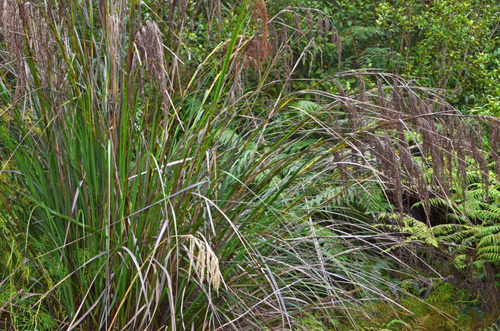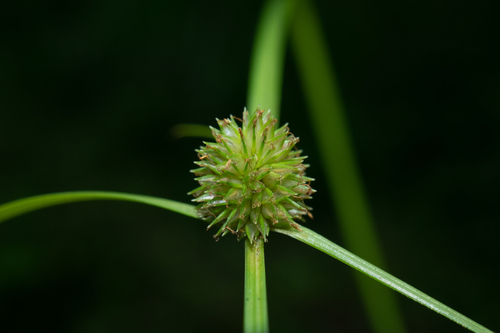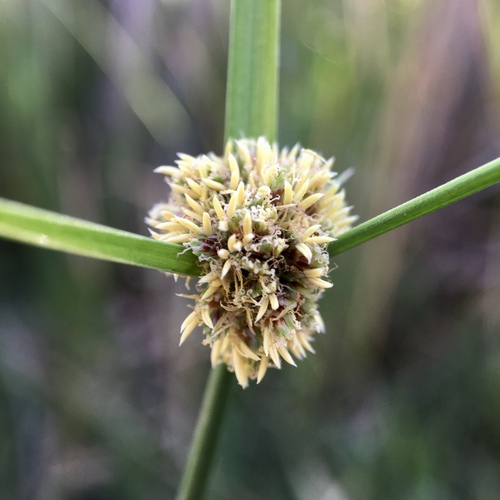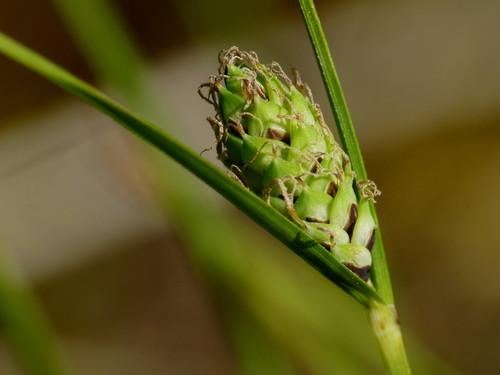
About Cyperus articulatus L.
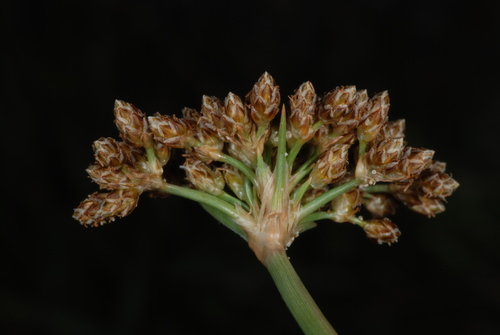
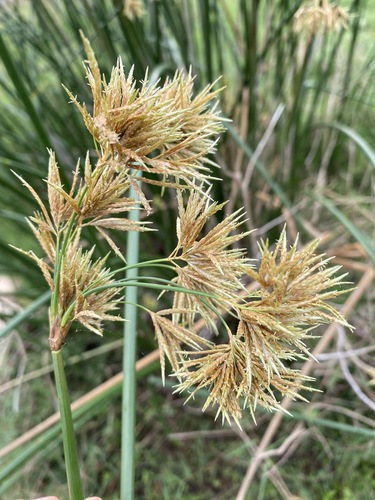
Cyperus articulatus L., commonly known as priprioca, is visually similar to Cyperus corymbosus. It has terete culms that are transversely septate, with intersepta measuring 5–20 mm long. This species completely lacks leaf blades, and has scale-like involucral bracts that are shorter than 15 mm. Its anthers are 1.0–1.5 mm long, and its floral glumes range from 2.25–3.5 mm in length. Priprioca is a relative of other nut sedges like tigernut, and its roots produce a light, woody, spicy fragrance with floral notes. It is counted among the traditional spices of the Amazon region, and is used for medicinal purposes in local Amazonian tradition. Its reddish essential oil is used commercially by the cosmetic industry, and is growing in use as a food flavoring. Similar to its relative papyrus, priprioca fibers and rhizomes are also used in craft making. In addition to their strong fragrance, craft products made from these materials are resistant to mold, which suggests the plant's essential oil may have antifungal properties. The main chemical components of priprioca essential oil are mustakone, α-pinene, β-pinene, caryophyllene oxide, trans-pinocarveol, myrtenal, myrtenol, ledol, cyperotundone, and α-cyperone, with no single component making up a majority of the oil. Local Amazonian medical tradition notes that priprioca may be harmful to pregnant people, with possible adverse effects including miscarriage.