About Cyornis tickelliae sumatrensis (Sharpe, 1879)
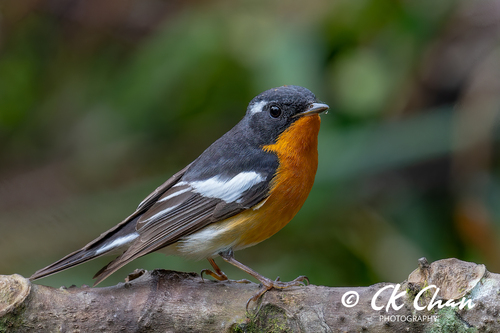
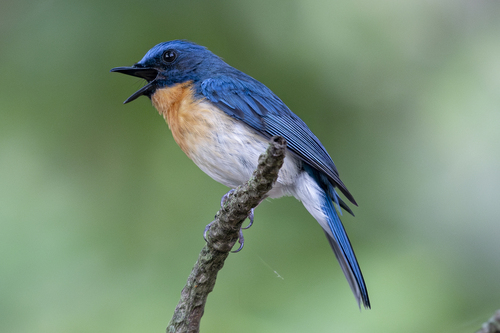
Tickell's blue flycatcher measures about 11–12 cm in length. It sits upright and forages primarily in overgrowth. Males have bright blue upperparts, red throat and breast, and white underparts on the rest of the body. Females have duller blue plumage overall, with brighter blue coloring on the brow, shoulder, rump, and tail. This species hybridizes with the pale-chinned blue flycatcher (Cyornis poliogenys) in India's Eastern Ghats, and these hybrids have sometimes been classified as the subspecies vernayi. Juveniles have streaked plumage, a spotted mantle, and scaly brown upperparts, head, and breast; only the wings and tail are blue. Tickell's blue flycatchers have been known to feed even after dusk. Their main diet consists of flying insects, but they may occasionally pick up crawling insects as well. The species shows regional variation in plumage and size, and several distinct populations have been given subspecies names. The nominate subspecies is found in India, Nepal, and Myanmar. The population native to Sri Lanka is classified as C. t. jerdoni (also referred to as nesea or mesaea, which are described as darker); this subspecies also has a longer bill. The subspecies C. t. indochina ranges from Myanmar through Thailand into Cambodia and Vietnam. The subspecies C. t. sumatrensis is found in southern Thailand, peninsular Malaysia, and northeastern Sumatra, while the subspecies lamprus is an insular population native to Anamba Island. In the past, this species was treated as a subspecies of the blue-throated blue flycatcher (Cyornis rubeculoides), which resembles Tickell's blue flycatcher but has a blue throat. Tickell's blue flycatcher breeds in dry forest, scrub, bamboo, and gardens. Its metallic song is made up of a series of clicks followed by five or six notes that end abruptly; these five or six notes resemble the song of the Spot-breasted fantail. Its alarm calls are churr sounds and clicking notes. It is a wary bird that can be easily observed even in small gardens. As a forest-loving species, it inhabits thick, shaded cover, and it particularly frequents the banks of wooded streams. It feeds mainly by capturing insects in flight, but its prey also includes other insects such as termites and earwigs that it gleans or picks from the ground. More recently, the species has been observed living in garbage areas. During the breeding season, individuals may take larger prey, including small vertebrates; a bush frog has been recorded as prey in Sri Lanka. The breeding season runs from April to August, or March to June for populations in Sri Lanka. It builds its nest in a tree hole or among rocks, lines the nest with fine grass and fibers, and lays 3–5 eggs per clutch.