About Cyornis poliogenys W.E.Brooks, 1880
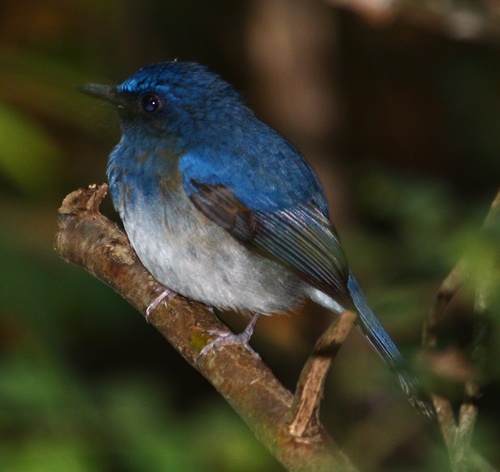
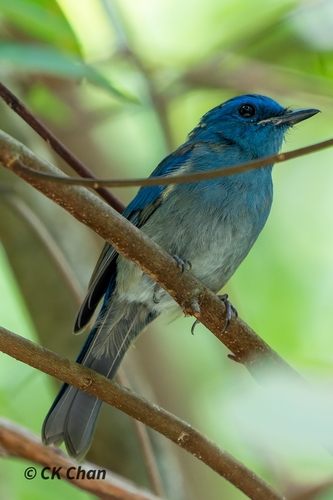
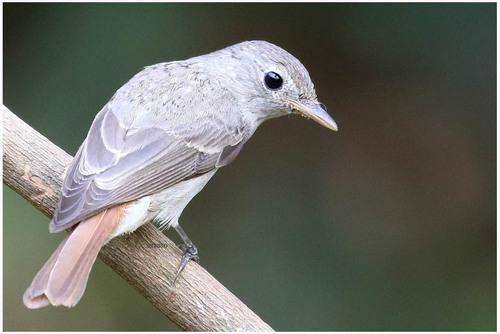
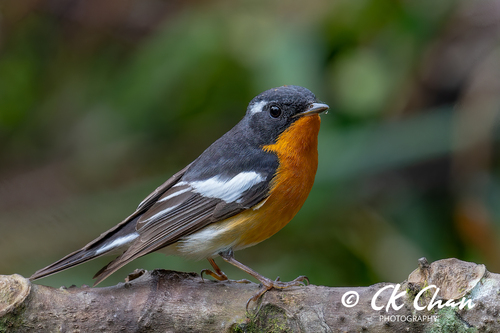
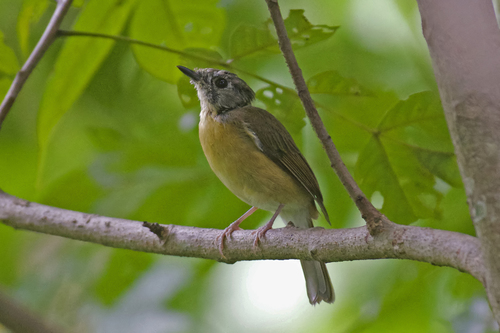
The pale-chinned flycatcher, scientifically named Cyornis poliogenys W.E.Brooks, 1880, is a bird species belonging to the Muscicapidae family. Historically, it has also been called the pale-chinned blue flycatcher (a name used for it on the IOC World Bird List through 2023) and Brook's flycatcher. This is a medium-sized flycatcher, measuring 15.5–18 cm (6.1–7.1 in) in length. Both sexes share similar plumage: dull bluish-grey upperparts, a rufous chest, a whitish throat, and white underparts. Unlike many other mainland Asian Cyornis species, male pale-chinned flycatchers do not have intense blue coloring. The species' nesting season falls between April and June, and it feeds on insects. This bird is distributed across Bangladesh, Bhutan, China, India, Myanmar, and Nepal. Its natural habitat is subtropical or tropical moist lowland forests, and it can be found at altitudes ranging from sea level up to 1,600 metres. Four subspecies of Cyornis poliogenys are currently recognized: C. p. poliogenys, which ranges from the central Himalaya to eastern Bangladesh and southwestern Myanmar; C. p. cachariensis, which ranges from the eastern Himalaya to south-central China and northern Myanmar; C. p. laurentei, which is found in Yunnan, southern China; and C. p. vernayi, which is found in the Eastern Ghats of eastern India. Compared to the nominate subspecies, C. p. vernayi has stronger blue coloring on its upperparts and more orange coloring on its underparts.