About Cynoglossum officinale L.
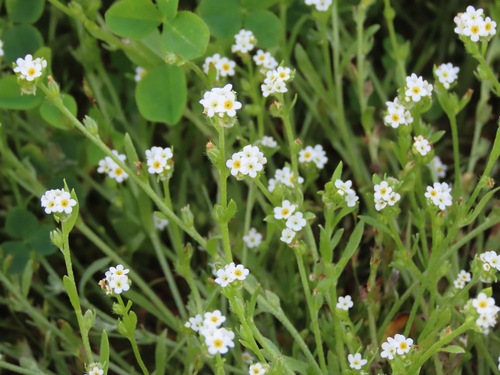
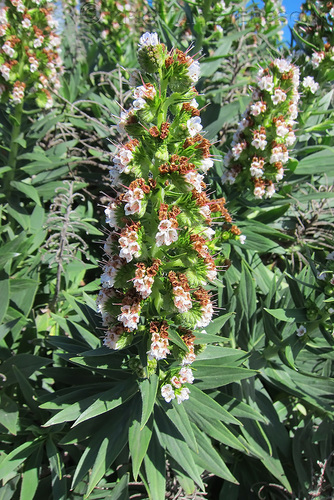
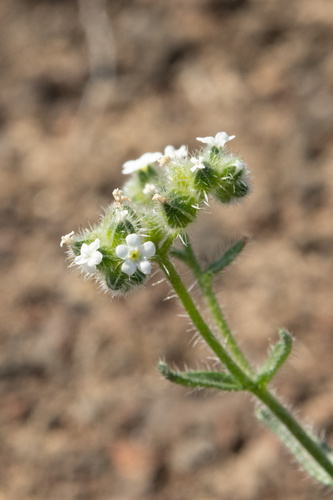
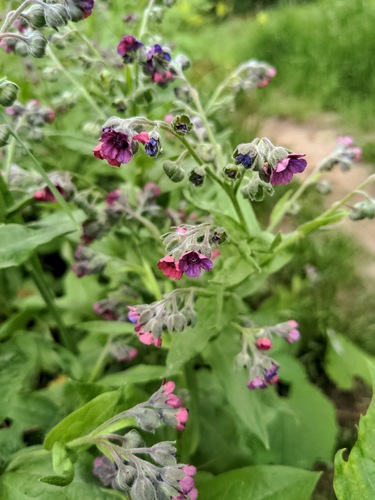
Cynoglossum officinale L. may grow as either an annual or biennial plant. Its leaves are greyish, covered in soft hair, and shaped from lanceolate to oblong. Reddish-purple, funnel-shaped flowers bloom between May and September. Both the common and scientific name of this plant come from its long greyish leaves, which resemble a dog’s tongue; the plant was historically used as a remedy for dog bites. This species is found across most of Europe, and was accidentally introduced to North America. It occurs in British Columbia, Canada, where it is classified as a noxious weed under the British Columbia Weed Control Act. It grows in wet areas, sand dunes, waste land, and hedges. Houndstongue can be pollinated by bees, and can also self-pollinate. Cynoglossum officinale contains tumorigenic pyrrolizidine alkaloids. It is toxic to cows, and poses a particular danger to pasture owners.