About Cynocephalus volans (Linnaeus, 1758)
Common and Scientific Names
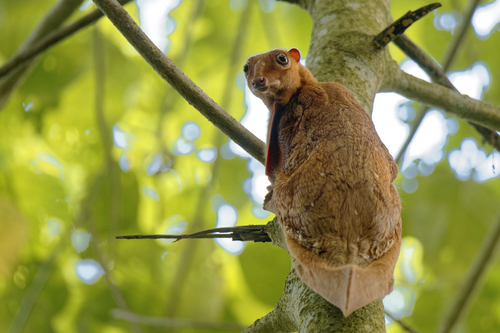
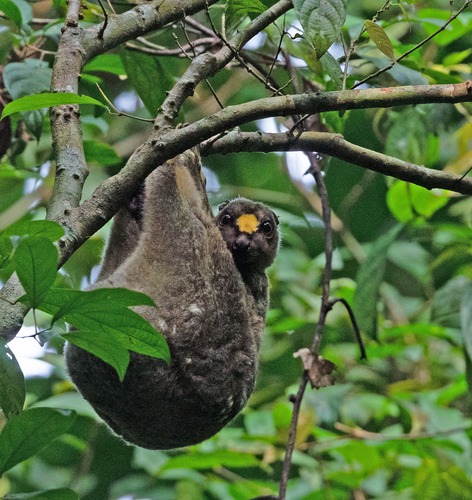
The Philippine flying lemur, also called Philippine colugo, has the scientific name Cynocephalus volans (Linnaeus, 1758) and is known locally as kagwang.
Taxonomic Classification
It is one of only two existing species of colugo, also called flying lemurs, and it is the only species in its monotypic genus Cynocephalus.
Common Name Misconceptions
Despite its common name "flying lemur", this animal is not a lemur, and it cannot fly. Instead, it glides between trees when leaping.
Order Dermoptera
Kagwang belongs to the order Dermoptera, which currently contains only two recognized species. The other recognized species is the Sunda flying lemur, which lives in Indonesia, Thailand, Malaysia, and Singapore.
Proposed Additional Dermoptera Species
Recent genetic research suggests two additional species, the Bornean flying lemur and Javan flying lemur, may exist, but they have not yet received official classification.
Higher Taxonomic Grouping
All currently recognized Dermoptera species are grouped under the grandorder Euarchonta, a group that also includes treeshrews, primates, and the extinct mammalian order Plesiadapiformes.
Endemic Range
The Philippine flying lemur is endemic to the southern Philippines. Its population is concentrated primarily in the Mindanao region and Bohol, and it may also be found in Samar and Leyte.
Forest Habitat
This species lives in heavily forested areas, staying mainly high in the trees of lowland and mountainous forests. It can sometimes also be found in coconut and rubber plantations, and it rarely comes down to the ground.
Canopy Position
It spends most of its time in the upper or middle layers of the rainforest canopy.
Morphology and Climbing Behavior
Equipped with wide gliding membranes (patagia) and unopposable thumbs, Philippine flying lemurs are slow, clumsy climbers that ascend tree trunks in a series of slow lurches, keeping their heads pointed upward and limbs spread to grasp the tree trunk.
Reproductive Behavior Knowledge Gap
Little is known about the reproductive behavior of colugos.
Gestation and Birth
Female Philippine flying lemurs usually give birth to a single young after a two-month gestation period. The young is born underdeveloped and helpless, and it attaches to its mother's belly inside a pouch formed by the mother's tail membrane.
Juvenile Development
The young is weaned around 6 months old, when it leaves its mother's patagium. Individuals reach adult size and sexual maturity between two and three years of age.
Mating Period
Mating most often occurs between January and March.