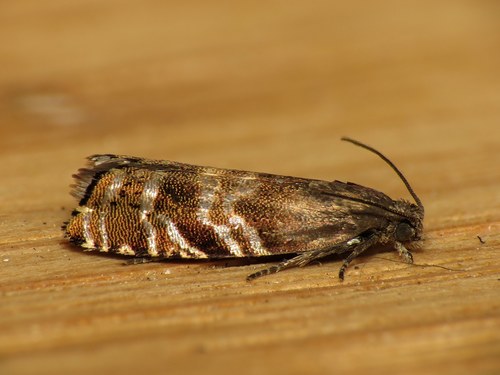
About Cydia strobilella (Linnaeus, 1758)
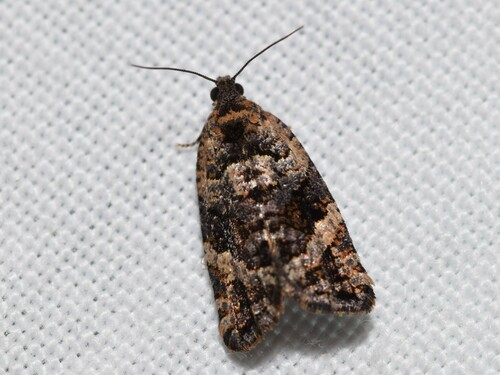
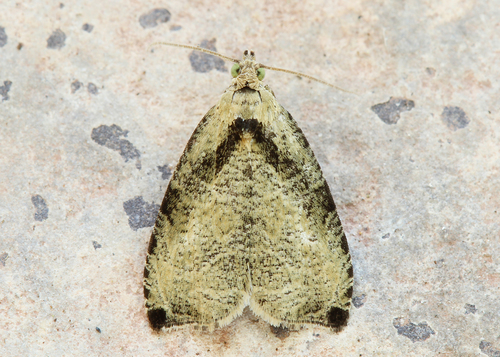
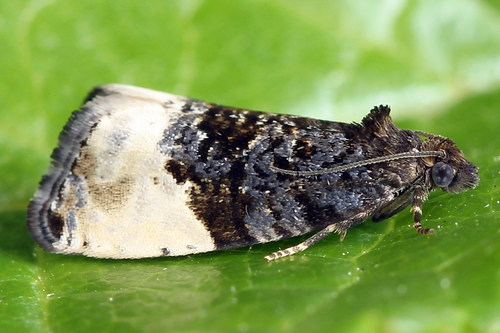
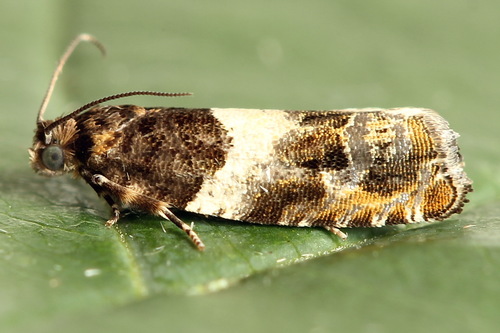
Cydia strobilella, commonly known as the spruce seed moth, is a moth species belonging to the family Tortricidae. It is found in Europe, and also widespread across Canada and the northern United States. Its wingspan measures 10–15 mm. Adult moths fly from April to June depending on location; in Ontario, flight occurs in May, around the time spruce pollen is shed. This species has previously been referred to as Laspeyresia youngana Kearfott or Cydia youngana Kearfott. The larvae of Cydia strobilella feed on the developing seeds of Abies alba, Picea omorika, Picea abies, and Pinus sylvestris, and develop inside the cones of various spruces. Cydia strobilella is considered a major pest of spruce. Severe damage to white spruce cones has been recorded in central and western Canada, while the species is only of moderate importance as a pest in Ontario. When egg-laying, females lay a single egg per cone if cones are abundant. After hatching, the larva first tunnels through cone scales, then moves deeper to feed on developing seeds. In late June, the larva creates a narrow tunnel along the cone axis to continue feeding. When fully grown in the fall, the larva is approximately 10 mm long. It hibernates in the central tunnel inside the cone and pupates the following spring; adult moths emerge from their pupal cases around 18 days after pupation. Some larvae do not pupate in their first spring, and instead remain dormant for one or more years. The number of adult moths present in a given year appears to correlate with the number of cones that have developed.