About Cydia pomonella (Linnaeus, 1758)
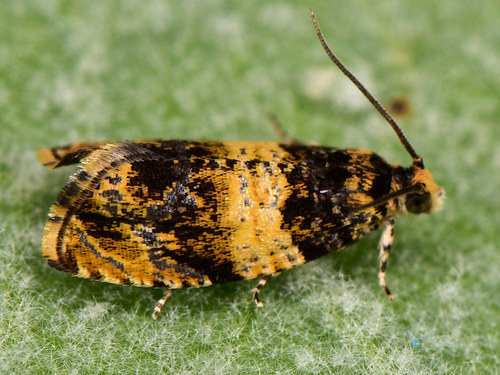
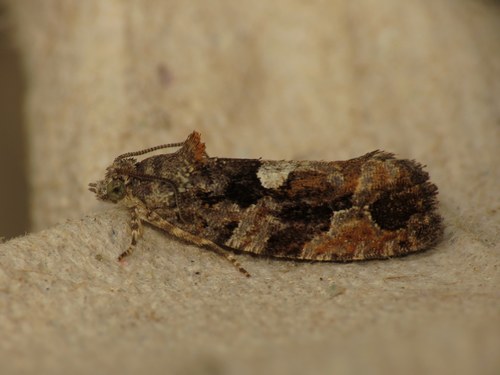
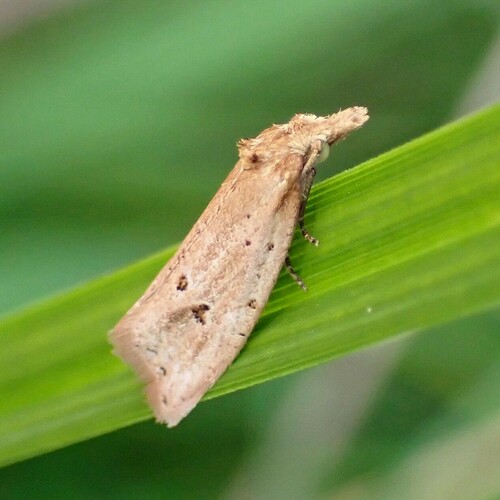
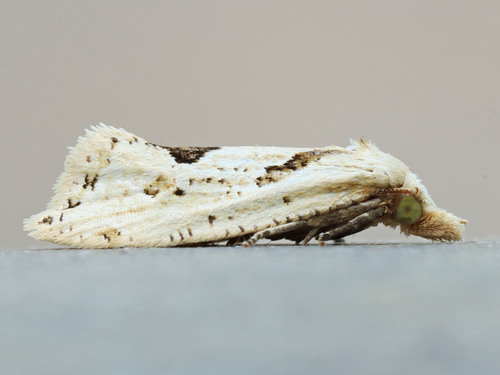
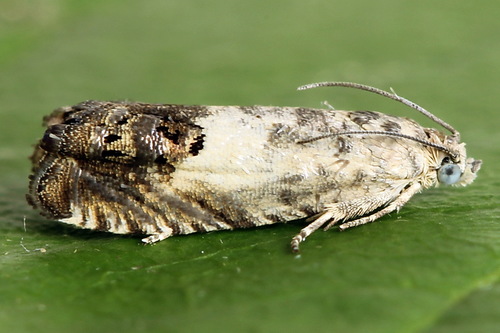
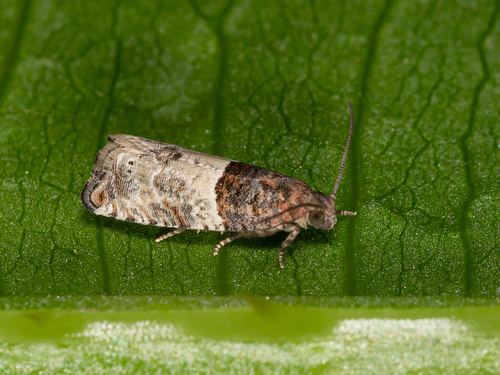
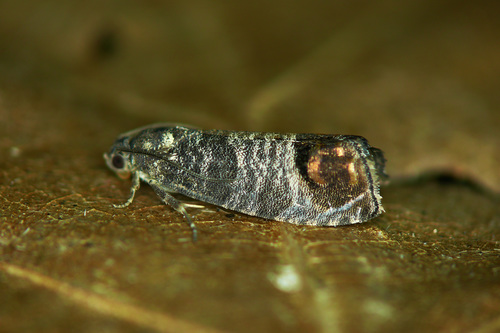
Morphology: Codling moths (Cydia pomonella) are not large. Fully grown adult codling moths have an average length of 10 mm and a wingspan of 20 mm. When resting, their wings fold into a tent-like shape. They can be distinguished from other similar moths in the family Tortricidae by the distinctive patterns on their forewings. These patterns are brown spots enclosed in gold rings, called "little mirrors", because they resemble small mirrors with a golden rim. Their slender antennae are mildly curved near the distal end. The dorsal side of the abdomen is smooth and bare, while the ventral side is covered in scales. While most adult codling moths are brown or gray, the maturity of the fruit that their larvae feed on can cause color variation in adult moths, which has been observed. Geographic distribution: Although the geographic origin of codling moths is unclear, theories suggest they originated from either Europe or the Mediterranean. Scholars believe codling moths were introduced to the Americas in the mid-1700s. There is still ongoing debate over whether these moths have been distributed by humans. Today, codling moths are spread worldwide, found across Europe, Asia, Africa, North America, South America, Australia, and Pacific islands. Habitat: The viability and fitness of codling moths are highly dependent on humidity levels and climate. Observation has found the optimal conditions for codling moth growth and survival are 32 °C and 75% humidity. Even when temperature is favorable, both low and high relative humidity (20% and 100% respectively) hinder pupation. At temperatures below 0 °C, larvae become completely inactive and appear lifeless. However, researchers have observed that when temperatures return to optimal levels, larvae regain normal activity. Codling moths have been found at altitudes as high as 1000–1500 m. Because the codling moth is polyphagous, meaning it can use a variety of food sources, the availability of specific food resources does not determine its optimal habitat. All life stages of the moth, from eggs to pupae, can be found on host plants that larvae feed on. These host plants include apple, pear, walnut, chestnut, and apricot trees.