About Cydia nigricana (Fabricius, 1794)
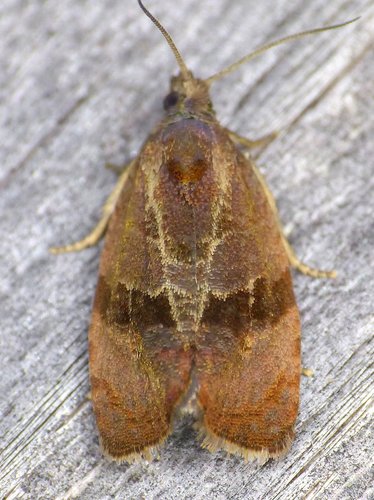
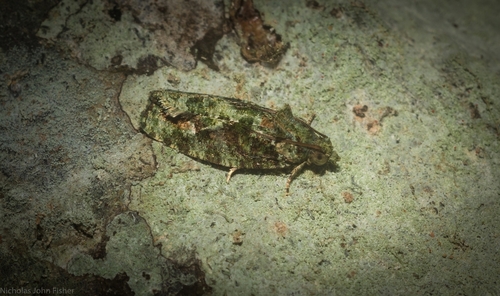
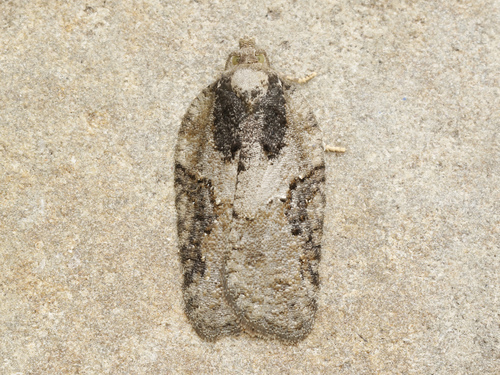
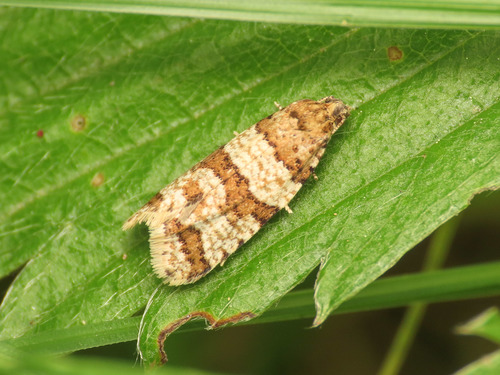
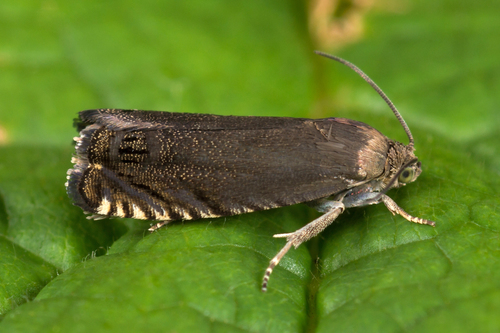
Cydia nigricana (Fabricius, 1794) is a small moth with a 15 mm wingspan and a grey-brown body. It has long antennae relative to its body size, and brownish-grey wings with white and yellow spots arranged in a herringbone pattern along the wing edge. This species produces a dark brown pupa that measures about 7.8 mm long, and has rows of spines along its body. Host plants for Cydia nigricana include peas, vetch, clover, and lentils. The caterpillars are small, yellow-white or creamy white, and grow up to 14 mm long; they are active from late June through August. The caterpillars feed inside pea pods, and damage to peas often goes undetected until the pods are harvested. One or two caterpillars may occupy a single pod, and only 1 or 2 individual peas in each attacked pod are partially eaten. Attacked pods typically develop a yellow colour and ripen earlier than undamaged pods. In its life cycle, adult moths emerge from cocoons buried just below the soil surface starting in early June. After feeding on pea plant flowers, females lay 1 to 3 eggs on the undersides of leaves, leaf stalks (petioles), stems, and flowers. The eggs are less than 1 mm in size and flattened on one side. Caterpillars hatch 7 to 10 days or 1 to 3 weeks after laying, with the exact hatching time depending on temperature. Newly emerged larvae have a very short one-day wandering stage before burrowing into pods to feed on developing peas for up to a month. Total larval development lasts 18 to 30 days, and caterpillars grow through a series of moults. When fully mature, usually in August, caterpillars eat their way out of the pods. The mature larvae then migrate down to the ground to overwinter in the soil, where they spin a cocoon made with soil particles and hibernate inside through the winter.